
24/7 Live Chat Support: A Complete Guide for Businesses
Last updated:
24/7 live chat support combines round-the-clock staffing, chat routing, CRM access, knowledge management, escalation procedures, and quality monitoring to assist customers across time zones. Businesses should consider outsourcing when after-hours gaps, volatile chat volumes, multilingual demand, or limited internal QA make reliable coverage difficult to maintain.
What Is 24/7 Live Chat Support?
24/7 Live Chat Support is a real-time customer support channel that allows people to contact a business through a chat window on its website, mobile app, or customer portal at any time, including evenings, weekends, and holidays.
Customers can use the service to ask about products, pricing, orders, billing, accounts, or basic technical issues without waiting for an email reply or staying on hold. Support may be provided by human agents, AI chatbots, or a combination of both. Chatbots can answer routine questions instantly, while agents step in when customers need detailed guidance, account-specific assistance, or help with a more complex issue.
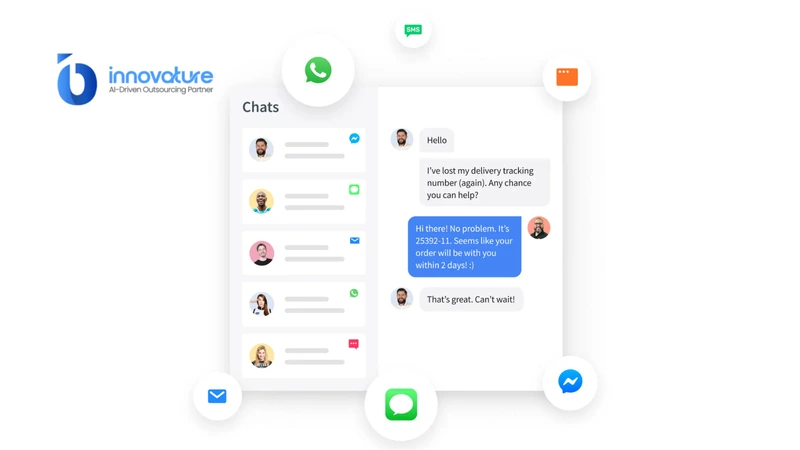
How Does 24/7 Live Chat Support Work?
24/7 Live Chat Support combines staffing, technology, and clear handoff procedures to keep customer conversations moving at any hour. The goal is not simply to keep a chat window online, but to ensure each inquiry reaches the right agent and retains its context until it is resolved.
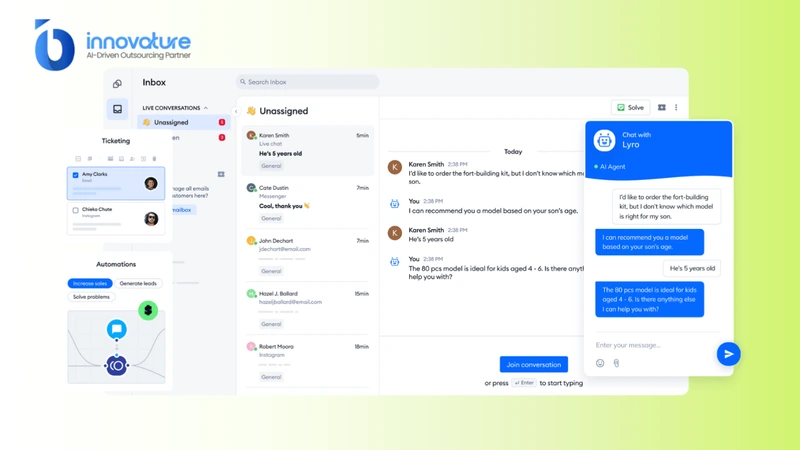
Coverage and Staffing Models
Businesses can organize 24/7 chat support in several ways:
- Rotating shifts: Agent teams cover different periods of the day.
- Follow-the-sun: Teams in different time zones take over as another region finishes work.
- After-hours support: An external team handles chats outside the internal team’s schedule.
- Overflow support: Additional agents join when chat volume exceeds normal capacity.
A chat support team may be dedicated to one business or shared across several accounts. The right model depends on customer time zones, languages, chat volume, issue complexity, and response-time targets. Workforce planning should also account for peak hours, weekends, holidays, training, and agent absences.
Chat Routing and Escalation
When a customer starts a conversation, a pre-chat form or chatbot may first identify the language, product, or type of issue. Routing rules then send the chat to the most suitable agent.
The agent reviews available customer information through a CRM or ticketing system and either resolves the request or transfers it to a supervisor or specialist. To keep the support workflow consistent, the following details should remain attached to the case:
- Chat transcript and customer details.
- Actions already taken.
- Tags and issue category.
- Unresolved questions and next steps.
This allows the next agent or shift to continue the conversation without asking the customer to repeat the same information.
How Can Live Chat Support Improve Customer Experience and Conversion?
Live Chat Support can improve both the quality of customer interactions and the likelihood that visitors complete a desired action. Its impact is most visible when businesses remove buying barriers and remain available beyond normal working hours.

Reduce Pre-Purchase Friction
Forrester found that 55% of US online adults are likely to abandon an online purchase if they cannot find a quick answer to their question. Customers often hesitate when important details remain unclear, including:
- Product features or compatibility.
- Pricing and payment options.
- Delivery or implementation timelines.
- Returns, cancellations, and warranties.
Live Chat Support can remove these barriers by giving customers direct access to the information they need while they are still comparing products, reviewing pricing, or completing checkout. Agents can clarify purchase conditions, recommend a suitable option, and address concerns before the customer leaves the website.
This timely pre-sales support can have a measurable impact on conversion. Invesp reports that adding live chat to a website can increase conversion rates by 20%. Kayako’s live chat research found that online shoppers who used live chat were 513% more likely to purchase. By resolving uncertainty at the point of decision, Live Chat Support helps more visitors move from consideration to purchase.
Capture Demand Outside Business Hours
Customers may research products, compare pricing, or request help after the internal team has finished work. This is especially common when a business serves international customers across different time zones.
24/7 Live Chat Support can capture this after-hours demand by:
- Answering routine product or service questions.
- Collecting and qualifying lead information.
- Helping customers complete checkout.
- Booking appointments or demonstrations.
- Creating tickets for unresolved issues.
- Passing qualified inquiries to sales or specialist teams.
A follow-the-sun model can help businesses extend live chat coverage across regions without maintaining a full local night shift. This is one of the key time zone advantages of 24/7 outsourcing call centers. Some requests can be resolved immediately. Others require a clear sales handoff or follow-up from an internal team. Maintaining the chat history, customer details, and agreed next steps helps prevent missed opportunities without forcing customers to repeat their requests.
How to Build a Sustainable 24/7 Live Chat Support Strategy
A sustainable Live Chat Support strategy requires more than keeping agents online. Businesses need clear service boundaries, realistic staffing, reliable support resources, and consistent quality controls. These elements should be established before expanding coverage across nights, weekends, holidays, and multiple customer time zones.
Define the Scope and Coverage
Start by defining what the live chat team will handle. This may include pre-sales questions, lead qualification, order updates, account support, appointment booking, basic troubleshooting, and complaint intake.
Businesses should also clarify:
- Which markets, time zones, and languages require coverage.
- Which issues agents can resolve independently.
- Which cases must be escalated internally.
- Whether support should run during business hours, extended hours, after hours, or continuously.
Full 24/7 coverage is not always necessary at launch. Businesses can begin with extended-hours or after-hours support and expand once demand is confirmed.
Place Live Chat at High-Intent Touchpoints
A live chat widget should appear where customers are most likely to need information before taking action. Priority locations include:
- Product and service pages.
- Pricing pages.
- Checkout.
- Contact pages.
- Help centers and customer portals.
- Return or cancellation pages.
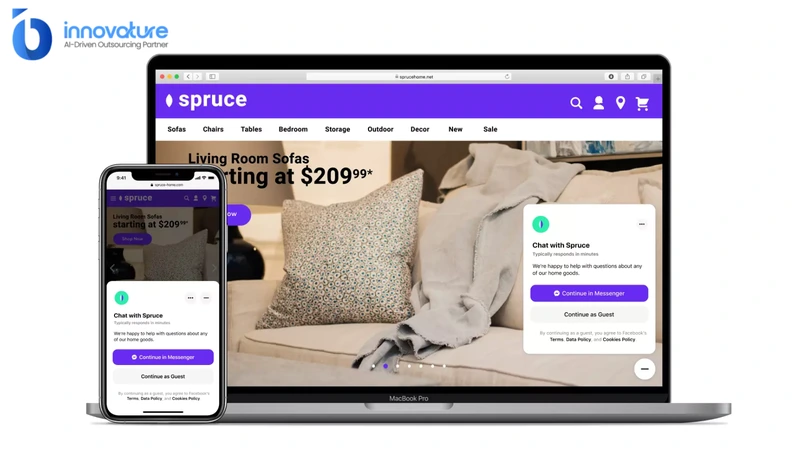
The widget should be visible without covering important content or interrupting the mobile experience. Proactive chat can also be triggered when a visitor spends a long time on a pricing page, returns repeatedly, encounters a checkout issue, or appears ready to leave. These prompts should be selective, as excessive pop-ups can create friction rather than reduce it.
Train Agents and Prepare Support Guidelines
Agents need enough knowledge and authority to respond accurately without relying on internal teams for every question. Training should cover products, customer policies, brand voice, written communication, CRM usage, data handling, and escalation procedures.
Each agent should also have access to:
- An updated knowledge base and FAQ.
- Troubleshooting steps.
- Approved response templates.
- Refund or compensation limits.
- A clear escalation matrix.
Canned responses can improve speed, but they should be adapted to the customer’s situation. Role-playing exercises and supervised chat sessions can help confirm that agents are ready before they handle conversations independently.
Forecast Chat Volume and Staffing Needs
Staffing decisions should be based on when chats arrive, how long they take to resolve, and how complex they are. Businesses should review:
- Hourly chat volume.
- Peak periods and seasonal campaigns.
- Average handling time.
- Target first response time.
- Agent breaks, training, meetings, and unplanned absences.
- Chat concurrency.
An agent may handle several simple product questions at once, but billing, technical, or complaint cases often require more attention. A pilot period can provide real usage data before the business commits to long-term staffing levels.
Use Technology and AI to Improve Efficiency
Live chat should connect with the systems agents already need, including the CRM, ticketing platform, knowledge base, customer profile, and order management system. This prevents customers from repeating information and gives agents a clearer view of previous interactions.
AI can support live chat operations by:
- Identifying customer intent.
- Routing conversations.
- Suggesting relevant replies.
- Searching the knowledge base.
- Summarizing transcripts.
- Handling routine questions.
Human agents should remain involved in complaints, refunds, account-specific issues, and cases that require judgment or empathy. Sensitive customer data should be handled through documented access controls and security procedures.
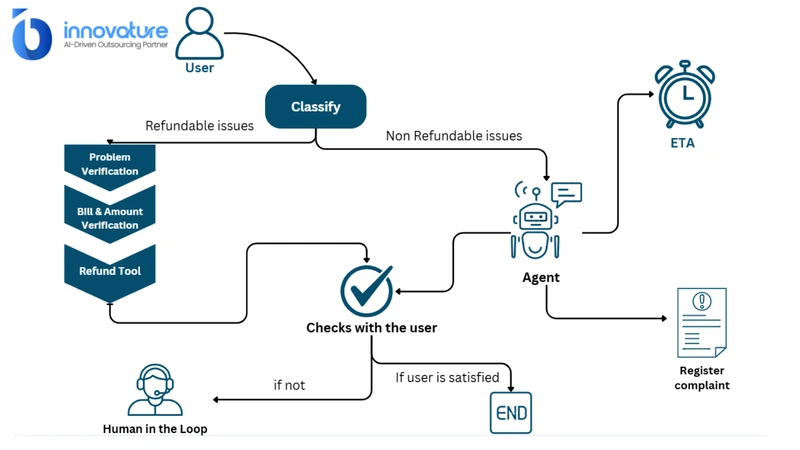
Consider Outsourcing Live Chat Support
Customer service outsourcing allows businesses to extend live chat coverage without recruiting, scheduling, and managing every shift internally. A qualified provider can supply trained agents, structured onboarding, workforce scheduling, and quality monitoring based on agreed service standards.
Key advantages include:
- Faster deployment of 24/7 or after-hours coverage.
- Flexible staffing during peak seasons and campaigns.
- Access to dedicated or multilingual live chat agents.
- Consistent training, coaching, and QA reviews.
- SLA and performance reporting.
- More internal capacity for complex cases and core activities.
With agents available to respond in under 30 seconds, chat support outsourcing can also help businesses increase website conversion rates by up to 25% by addressing customer questions before purchase intent declines.
When businesses outsource live chat support, they can retain control over brand voice, agent authority, escalation rules, data access, and customer experience targets. Clear knowledge transfer and regular calibration help the outsourced team operate as an extension of the internal support function.
Monitor Live Chat Performance
Performance should be measured across speed, quality, and business outcomes. Core Live Chat Support metrics include:
- First response time.
- Missed chat rate.
- First contact resolution.
- CSAT.
- Escalation rate.
- QA score.
- Chat-assisted conversion.
Speed should not be reviewed in isolation. A fast but inaccurate response can create repeat contacts or incorrect expectations. Chat data should also be used to identify common questions, update the knowledge base, improve website content, and adjust staffing during busy periods.
Maintain Clear and Conversational Communication
Live chat conversations should be easy to understand and focused on resolving the customer’s issue. Agents should answer the question directly, explain the next step, and avoid unnecessary jargon or overly formal language.
Each response should:
- Match the company’s brand voice.
- Use short and clear sentences.
- Reflect the customer’s specific situation.
- Avoid promises outside approved policies.
- Show empathy when appropriate.
Agents may also share screenshots, help articles, documents, or videos when these formats explain a process more clearly than text alone.
When Should You Outsource Live Chat Support?
Outsourcing becomes practical when maintaining reliable coverage, staffing, and quality controls internally requires more resources than the business can reasonably provide. The decision should address a specific operating gap rather than being based only on cost reduction.
Similar operating gaps may also affect voice, email, and social media support. Reviewing the broader signs that customer experience outsourcing may be necessary can help businesses determine whether the issue extends beyond live chat.
- Coverage gaps: Chats received outside business hours, on weekends, or during holidays are frequently missed.
- Unstable response times: First response time rises sharply during peak periods, campaigns, or unexpected demand.
- Rapid volume growth: Chat demand is increasing faster than the business can recruit, train, and supervise new agents.
- Seasonal demand: Staffing requirements change significantly during sales seasons, product launches, or promotional campaigns.
- Global customers: Customers need support across multiple time zones and markets or require reliable multilingual customer support.
- High management burden: Internal managers spend too much time on recruitment, scheduling, attendance, coaching, and shift coverage.
- Limited QA capacity: The business lacks resources for transcript reviews, calibration sessions, quality scoring, and performance reporting.
- Standardized Tier 1 workload: Most inquiries follow established SOPs and can be transferred without losing operational control.
- Need for scalability: Agent capacity must increase or decrease without repeated internal hiring and restructuring.
When these conditions begin to affect service consistency or customer experience, a specialized provider can help establish a more scalable operating model.
Innovature BPO can provide dedicated live chat agents aligned with the client’s markets, service hours, and support requirements. The transition may include knowledge transfer, SOP development, response guidelines, chat routing, escalation workflows, QA scorecards, and SLA and KPI monitoring. The outsourced team can also work with the client’s existing CRM, ticketing, and automation platforms rather than requiring the business to replace its current systems.
Clear escalation rules allow routine requests to be resolved efficiently while complex, sensitive, or high-risk cases remain subject to human review and internal oversight.
Contact Innovature BPO to discuss a Live Chat Support model aligned with your customer markets, service hours, support platforms, and performance targets.

Outsourcing call centers are moving from traditional agent-led models to AI-enabled operations that combine automation with human expertise.…

Managing fragmented customer channels increases costs, repeat contacts, and service inconsistency across BPO operations. McKinsey reports that AI-powered…

Traditional CX and AI-Powered CX represent two different approaches to building customer service operations. While traditional models rely…

AI is becoming a core part of call center outsourcing. A 2026 Gartner survey found that 91% of…
For most SMEs, AI agents can deliver stronger ROI on repetitive, high-volume, and after-hours interactions, while human call…

Choosing the right outsourcing partner requires more than comparing pricing or available headcount. This guide explains how to…

AI-powered customer support outsourcing connects AI with outsourced teams to classify inquiries, retrieve customer context, automate approved tasks,…

SaaS companies can scale users faster than they can scale customer support. As ticket volumes rise, new markets…

Customer experience teams have no shortage of software options. The harder question is deciding which customer experience tools…

AI Voice Agent vs Human Call Center compares two different approaches to customer communication. AI Voice Agents use…

Call center outsourcing companies, also called CX outsourcing companies, run customer support for other businesses across phone, email,…

AI Voice Agent Integration in BPO call centers combines AI-powered voice technology with existing telephony, CRM, and customer…
Ready to move faster?
Trust us to find the best-fit candidates while you concentrate on building a skilled and diverse remote team.