
E-commerce Call Center Outsourcing: Guide and Best Practices
Last updated:
Call center outsourcing helps e-commerce businesses manage rising customer inquiries, seasonal demand, and multichannel support without overloading internal teams. With the right systems, training, security standards, and performance metrics, an outsourced call center can improve response times, maintain service quality, and scale with business growth.
What Is E-commerce Call Center Outsourcing?
E-commerce call center outsourcing means hiring an external team to handle customer conversations for an online store across phone, email, live chat, social media and marketplace messages. The team answers order questions, processes returns and resolves delivery issues under your policies, while your business keeps ownership of refunds, exceptions and the customer relationship.
Typical e-commerce support work includes “where is my order” (WISMO) inquiries, order changes and cancellations, returns and exchanges, refund status updates, product questions before purchase, payment and checkout issues, and responses to marketplace buyer messages.
The Role of Call Center Outsourcing in E-commerce
E-commerce customer service outsourcing supports customers throughout the buying journey, from product research and checkout to delivery and post-purchase assistance. This role directly affects customer retention. According to TCN’s Consumer Insights survey, 73% of consumers are likely to abandon a brand after just one poor customer service experience.
An outsourced team can manage customer support operations across phone, email, live chat, and social media, including:
- Answering questions about product specifications, sizing, colors, materials, and availability.
- Assisting with checkout, payment issues, and order confirmation.
- Modifying or cancelling orders.
- Providing order tracking and delivery updates.
- Handling returns, refunds, warranty claims, and complaints related to products, deliveries, or shipping providers.
- Conducting post-purchase surveys, customer follow-ups, and relevant outbound campaigns.

An outsourced inbound call center therefore does more than answer calls. It coordinates with order management systems, warehouse teams, shipping providers, payment teams, and internal escalation contacts to resolve customer issues accurately.
This model is especially valuable during seasonal demand, product launches, and promotional periods when inquiries can rise quickly. Call center outsourcing enables businesses to expand service capacity, extend support hours across time zones, and maintain response speed without placing additional recruitment and training pressure on internal teams.
By transferring routine and high-volume inquiries to a qualified partner, internal teams can focus on product development, marketing, order fulfillment, and operational improvement. With clear workflows and accurate data access, outsourced support can deliver a more consistent customer journey and reduce the risk of losing customers after a poor service interaction. A structured customer service outsourcing process also helps businesses define responsibilities, transfer knowledge, and prepare internal teams before launch.
Best Practices in E-commerce Call Center Outsourcing
Effective e-commerce call center outsourcing requires more than adding external agents. The outsourced team needs reliable data access, clear workflows, and practical training to resolve customer issues efficiently while maintaining a consistent brand experience.
Integrate Call Center Software With OMS and CRM Systems
Agents cannot provide fast, accurate support when customer, order, and delivery information is scattered across disconnected platforms. Call center outsourcing solutions should therefore integrate with the company’s Order Management System (OMS), Customer Relationship Management (CRM), ticketing system, and shipping or fulfillment tools.
With secure access, agents should be able to view:
- Order status, tracking numbers, and estimated delivery dates.
- Purchase history and previous customer interactions.
- Return, refund, exchange, or replacement requests.
- Earlier calls, emails, live chats, and support tickets.
CRM integration gives agents the context needed to handle inquiries without asking customers to repeat information. According to McKinsey research, 76% of consumers become frustrated when businesses fail to deliver personalized interactions. In a contact center, this may happen when agents cannot access a customer’s purchase history, previous conversations, or current order details.
Synchronizing call data with CRM and OMS platforms can also support intelligent routing. For example, inquiries from high-value customers or calls linked to delayed, cancelled, or flagged orders can be directed to the team best equipped to resolve them. This helps reduce hold times, unnecessary transfers, and repeat contacts while improving First Contact Resolution.
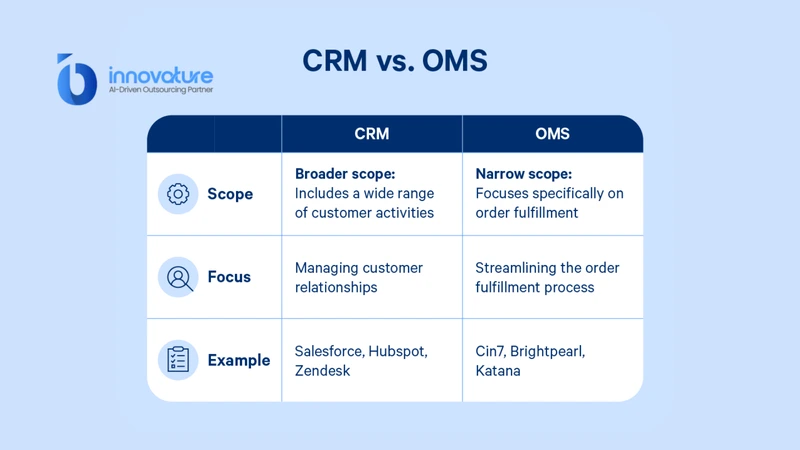
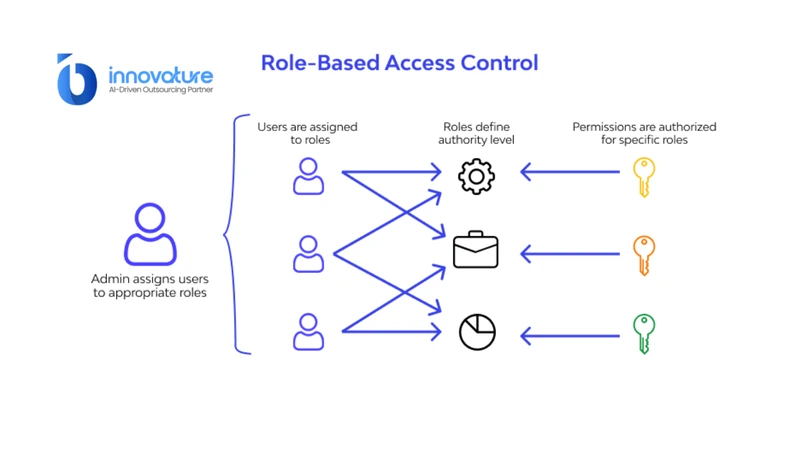
System access should remain role-based. Agents should only view or modify the information required for their responsibilities, while sensitive payment data, account changes, and high-value refunds may require additional verification or internal approval.
Provide Comprehensive Brand and Product Training
A fixed script is not enough for e-commerce customer support. Outsourced customer service training should give agents a practical understanding of the products, policies, brand voice, and service standards behind each interaction.
Training should cover:
- Product features, specifications, sizing, materials, colors, and usage.
- Warranty, return, refund, exchange, and cancellation policies.
- Current promotions, discount conditions, and stock availability.
- Order processing, delivery, and fulfillment procedures.
- Common complaints, escalation workflows, and approval requirements.
- The company’s customer service philosophy and communication style.
Knowledge transfer can combine a searchable knowledge base, documented SOPs, product demonstrations, call simulations, and role-playing. Before handling live interactions, agents should be assessed on both product knowledge and their ability to apply policies in realistic situations.
Brand voice training is equally important. Agents need to understand whether the business communicates in a warm, advisory, premium, technical, or concise manner. This helps outsourced interactions remain consistent with the experience customers receive through the website, social media, and other brand channels.
Training should continue after onboarding. Product catalogs, promotions, warranty terms, and fulfillment policies can change frequently in e-commerce. Regular knowledge updates, quality assurance reviews, and coaching help agents maintain accuracy and avoid relying on outdated information.
Maintain Strict Data Security and PCI DSS Compliance
E-commerce support teams may handle customer names, delivery addresses, purchase history, payment details, and, in some cases, cardholder data. For this reason, call center data security should be assessed before customer information is shared with an outsourcing partner.
The evaluation should cover:
- Secure payment-handling procedures.
- Role-based access to customer and order data.
- Multi-factor authentication and data encryption.
- Controls for call recording and screen capture.
- Security requirements for remote work environments.
- Data privacy training for agents.
- Incident detection, reporting, and response procedures.
- Evidence of PCI DSS compliance and other relevant requirements.
Secure call center outsourcing does not mean giving every agent unrestricted access. Permissions should reflect each role, while sensitive actions such as viewing payment data, changing account details, or approving high-value refunds may require additional verification.
PCI DSS applies to environments that store, process, or transmit payment card data. Businesses should therefore review the provider’s current certification, scope of compliance, and supporting documentation rather than relying on a general claim that its operations are “PCI compliant.” Clear customer data protection responsibilities should also be documented in the contract and operating procedures.
Deliver Multichannel and Extended-Hours Support
Modern call center outsourcing services can support online shoppers across phone, email, live chat, social media, marketplace messaging, and support tickets. Effective omnichannel customer support should connect these customer touchpoints rather than manage each channel as a separate operation.
A coordinated model allows:
- Agents to review earlier interactions across channels.
- Tickets to be routed to the appropriate team.
- Unresolved cases to be handed over between shifts.
- Urgent issues to follow a defined escalation process.
- Customers to continue a conversation without repeating the full history.
Extended-hours or 24/7 customer service can be useful for businesses serving multiple time zones, running flash sales, or receiving a high volume of evening checkout inquiries. Timely support may help resolve payment or product questions before a shopper abandons the purchase.
However, continuous coverage is not necessary for every business. E-commerce support outsourcing should be planned around actual contact volume, customer locations, sales patterns, and operating costs. Some companies may benefit from a follow-the-sun model to support customers across multiple time zones, while others may only need extended coverage during peak hours, weekends, or major campaigns.
Define Clear KPIs and SLAs
A clear service level agreement gives both the business and the provider a shared standard for managing outsourced customer support. Before launch, the two sides should agree on:
- Response and resolution targets.
- Operating hours and channel coverage.
- Expected interaction volumes.
- Required quality scores.
- Reporting frequency and format.
- Escalation conditions.
- Ownership of each operational task.
Call center KPIs should reflect both efficiency and customer outcomes. Common e-commerce metrics include:
| KPI | Role in e-commerce operations |
| FCR – First Contact Resolution | Measures how often an issue is resolved during the first interaction |
| CSAT – Customer Satisfaction Score | Tracks customer satisfaction after receiving support |
| AHT – Average Handle Time | Monitors handling efficiency without compromising service quality |
| Average Speed of Answer | Measures how long callers wait before reaching an agent |
| Abandonment Rate | Tracks the percentage of callers who disconnect before receiving support |
| Escalation Rate | Shows how often cases require a higher level of assistance |
| Refund Resolution Time | Measures how quickly refund requests are completed |
| Conversion Rate | Evaluates campaign performance when businesses outsource telemarketing or outbound sales activities |
These metrics should be reviewed together rather than in isolation. For example, reducing AHT may appear efficient, but rushed calls can increase repeat contacts, lower FCR, and weaken CSAT. Effective call center outsourcing solutions should use a balanced quality scorecard that reflects speed, accuracy, compliance, and customer experience.
Establish Clear Escalation and Quality Assurance Processes
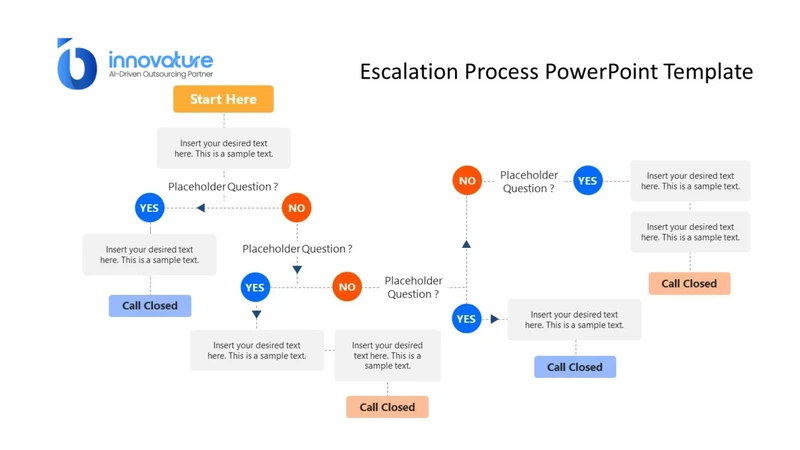
Even well-trained agents need clear limits on what they can resolve independently. A documented escalation workflow should define:
- The issues agents are authorized to handle.
- Refund or compensation approval limits.
- Cases that must be transferred to an internal team.
- The team or role responsible for each issue type.
- Response targets at every escalation level.
- The information required before a case is handed over.
Common escalation scenarios include suspected payment fraud, lost high-value orders, legal complaints, exceptional compensation requests, and negative feedback that may affect the brand’s reputation.
Call center quality assurance should then verify whether agents follow these procedures and provide accurate, consistent support. A practical QA program may include:
- Reviewing a representative sample of calls and tickets.
- Checking information accuracy and policy compliance.
- Scoring interactions against an agreed QA scorecard.
- Holding regular calibration sessions between the provider and client.
- Coaching agents based on recurring errors.
- Identifying why customers need to contact support more than once.
This approach turns QA into more than an agent-monitoring exercise. It also helps outsourced customer support management identify gaps in policies, training materials, order processes, and customer communication.
How to Scale E-commerce Support for Peak Seasons
Peak seasons such as Black Friday, Cyber Monday and the holidays can multiply contact volume in a few days. An outsourced team helps you absorb these peaks without hiring and training temporary staff in-house, as long as preparation starts weeks before the rush.
- Forecast volume early. Use last year’s contact data, planned promotions and expected order growth to estimate daily volume by channel.
- Train seasonal agents in advance. Onboard extra agents on products, policies and promotions before the peak, not during it.
- Update macros and self-service content. Refresh answers on shipping cut-offs, return windows and promotion terms, so agents and customers find the same information.
- Agree temporary service levels. Set realistic response targets for each channel during the peak, and define which contacts get priority.
- Review daily and adjust. Track backlog, response time and top contact reasons every day, and move agents between channels as demand shifts.
Common E-commerce Support Integrations
An outsourced team works fastest when it uses your existing tools instead of separate systems. Before launch, confirm which platforms agents need, what access level each role requires and how orders, tickets and customer history are linked.
| Tool Type | Common Examples | What Agents Use It For |
|---|---|---|
| E-commerce platform | Shopify, BigCommerce, Adobe Commerce, WooCommerce | Order lookup, edits, cancellations and refunds within agreed limits |
| Help desk | Zendesk, Gorgias, Freshdesk | Ticket handling, macros, customer history and reporting |
| Marketplace seller tools | Amazon Seller Central, eBay, Walmart Marketplace | Buyer messages, returns and claims |
| Shipping and returns tools | Carrier tracking and returns portals | Delivery status, return labels and exchange tracking |
Top Destinations for E-commerce Call Center Outsourcing
Vietnam, the Philippines, and India offer different advantages for e-commerce outsourcing. Businesses should compare service capabilities, language requirements, operating costs, technical expertise, and scalability before selecting a destination.
Location affects more than labor cost. Language coverage, time-zone alignment, customer service talent, infrastructure, and scalability can all influence how an offshore support model performs. Businesses comparing locations can review the top countries for offshore customer service before selecting a delivery market.
- Vietnam: An emerging outsourcing market with a growing STEM workforce and operating costs that can be 30–50% lower than India or China. Vietnam is well suited to email support, live chat, order processing, data annotation, technical back-office tasks, and Asian-language support.
- The Philippines: A leading destination for English-language voice BPO and customer service. Its strong communication skills and familiarity with Western markets make it suitable for outsourced inbound call center services, complaint handling, telesales, customer retention, healthcare support, and administrative processes.
- India: A major hub for IT outsourcing, technical support, software development, and complex back-office operations. Its large talent pool enables providers to scale teams quickly and manage high-volume programs at competitive costs.
| Feature | Vietnam | The Philippines | India |
| Core strength | STEM talent, data processing, and technical back-office support | Voice BPO, customer service, healthcare, and administrative support | Large-scale IT, software development, and complex back-office operations |
| English-language capability | Strong across voice, chat, technical, and back-office support | Strong in English voice and customer service | Strong in technical and business support |
| Cost profile | Highly competitive; potentially 30–50% lower than India or China | Mid-range | Cost-effective for large-scale delivery |
| Time zone | UTC+7; suitable for Australia and Asia-Pacific | UTC+8; supports Asia-Pacific and Western night shifts | UTC+5:30; suitable for staggered global coverage |
Once a suitable delivery location has been identified, businesses can compare contact center outsourcing companies based on their industry experience, technology capabilities, security controls, reporting processes, and ability to scale.
E-commerce Call Center Outsourcing Costs
The cost of e-commerce call center outsourcing depends on channels, languages, support hours, contact complexity and seasonal peaks. Providers usually charge an hourly rate per agent, a monthly fee per dedicated agent, or a price per contact or ticket. Our guide to call center pricing models explains how each model affects total cost.
How to Choose an E-commerce Call Center Partner
Choose an e-commerce support partner on proof of retail experience and flexibility, not on the lowest hourly rate. Ask each shortlisted provider for evidence in these areas.
- Retail experience. Experience with order, returns and marketplace support for similar product categories.
- Peak readiness. A clear plan for adding and training seasonal agents before high-volume periods.
- Tool fluency. Agents who can work in your e-commerce platform, help desk and marketplace tools.
- Data security. Controls for customer and payment data, with certifications whose scope covers your program.
- Quality and reporting. QA scorecards, KPI dashboards and regular reviews of top contact reasons.
Build a Scalable E-commerce Support Model With Innovature BPO
A scalable e-commerce support model must absorb changing order volumes without losing service quality or control. Innovature BPO builds dedicated support teams around the client’s products, service policies, systems, and seasonal demand patterns.
Its delivery model can include:
- Teams in Vietnam and the Philippines trained to work with CRM, ticketing, automation, and AI-enabled customer service workflows.
- Dedicated agents for calls, email, live chat, social media, order inquiries, returns, refunds, follow-up, and telemarketing.
- Transition support through knowledge transfer, product training, SOPs, guided practice, and QA calibration.
- Role-based access, enterprise security controls, and payment-handling procedures aligned with PCI DSS requirements.
- Coordination with CRM, OMS, and ticketing systems, supported by routing, escalation, SLA and KPI monitoring, and peak-season staffing plans.
Innovature’s operating discipline is reflected in a 12-month U.S. insurance project that achieved a 0% delayed-response rate for daily customer requests. In a separate SaaS telemarketing engagement, the team delivered a 3.6% conversion rate against a 2.5% KPI. While these projects were not in e-commerce, they provide relevant evidence of Innovature’s service-level discipline, response management, and outbound campaign execution.
Contact Innovature BPO to build a call center outsourcing model aligned with your e-commerce operations and seasonal demand.
Frequently Asked Questions
What Does an E-commerce Call Center Do?
An e-commerce call center handles customer contacts for an online store, including order tracking, order changes, returns, refunds, product questions and payment issues. Most programs cover phone, email, chat, social media and marketplace messages.
How Much Does E-commerce Customer Service Outsourcing Cost?
Cost depends on the pricing model, channels, languages, hours and seasonal volume. Common models are hourly or monthly rates per agent and per-contact pricing. A quote based on your actual contact volume and peak periods gives the most reliable estimate.
Can an Outsourced Team Handle Peak Seasons Like Black Friday?
Yes, if planning starts early. The provider should forecast volume, train seasonal agents before the peak, update response templates and review backlog daily during the busiest weeks.
Should Refunds Be Handled by an Outsourced Team?
Agents can process standard refunds and returns within limits you set, such as order value or reason codes. Exceptions, high-value refunds and fraud concerns should be escalated to your internal team for approval.

Outsourcing call centers are moving from traditional agent-led models to AI-enabled operations that combine automation with human expertise.…

Managing fragmented customer channels increases costs, repeat contacts, and service inconsistency across BPO operations. McKinsey reports that AI-powered…

Traditional CX and AI-Powered CX represent two different approaches to building customer service operations. While traditional models rely…

AI is becoming a core part of call center outsourcing. A 2026 Gartner survey found that 91% of…
For most SMEs, AI agents can deliver stronger ROI on repetitive, high-volume, and after-hours interactions, while human call…

Choosing the right outsourcing partner requires more than comparing pricing or available headcount. This guide explains how to…

AI-powered customer support outsourcing connects AI with outsourced teams to classify inquiries, retrieve customer context, automate approved tasks,…

SaaS companies can scale users faster than they can scale customer support. As ticket volumes rise, new markets…

Customer experience teams have no shortage of software options. The harder question is deciding which customer experience tools…

AI Voice Agent vs Human Call Center compares two different approaches to customer communication. AI Voice Agents use…

Call center outsourcing companies, also called CX outsourcing companies, run customer support for other businesses across phone, email,…

AI Voice Agent Integration in BPO call centers combines AI-powered voice technology with existing telephony, CRM, and customer…
Ready to move faster?
Trust us to find the best-fit candidates while you concentrate on building a skilled and diverse remote team.