
Best Payroll Services for Small Businesses: 2026 Guide
Last updated:
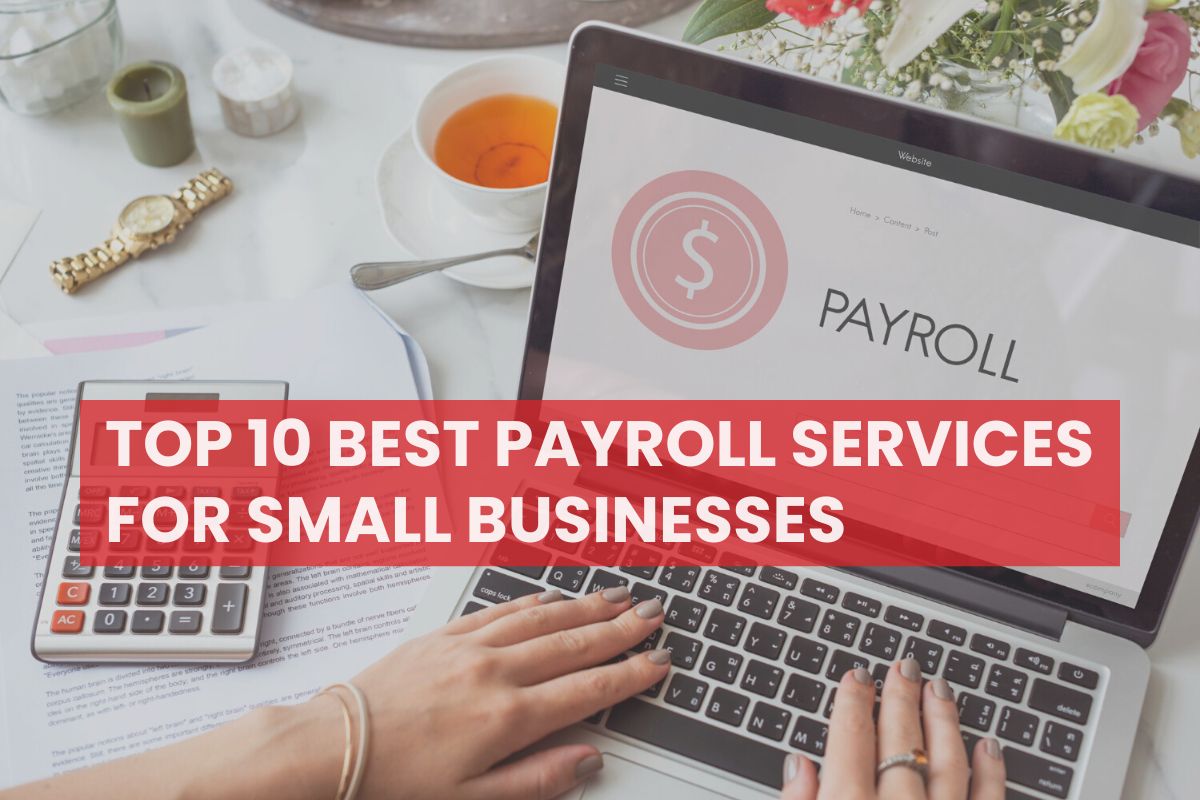
Best Payroll Services for Small Businesses: 2026 Buyer Guide
The best payroll services for small businesses are the ones that match the company’s employee count, operating states, payroll frequency, tax-filing needs, HR requirements, accounting systems, and preferred level of support. A five-person business running payroll in one state needs a very different service from a 75-person company managing employees across several jurisdictions, benefits programs, time tracking, and more complex payroll controls.
That is why selecting a provider should start with the payroll operating model rather than a ranking alone. Some businesses need straightforward payroll software with automated tax filing. Others need a provider that adds HR support, benefits administration, or dedicated payroll specialists. Businesses with more complex internal workflows may eventually need broader outsourced payroll capacity rather than another software subscription.
This guide compares several established payroll providers using their current 2026 offerings, then explains how to decide which model actually fits your business.
First Decide What Type of Payroll Service You Need
Before comparing the best payroll services for small businesses, determine how much responsibility you want the provider to take.
Three models commonly appear in the market.
| Payroll Model | What You Manage | What the Provider Handles | Best Fit |
|---|---|---|---|
| Payroll software | Inputs, approvals, payroll review | Calculations, system workflow | Very small/simple businesses |
| Full-service payroll | Inputs and final approval | Payroll processing, tax calculation and filing | Most small businesses |
| Payroll + HR platform | Payroll approval + HR decisions | Payroll, HR tools, benefits, time tracking | Growing businesses |
A fourth model, the Professional Employer Organization (PEO), is broader still. A PEO typically operates through a co-employment arrangement and may cover payroll, HR administration, benefits, risk management, and other employer functions.
That distinction matters because the previous version of this article compared providers such as Justworks and TriNet directly with payroll platforms such as OnPay and QuickBooks. They are not identical products and should not be evaluated as if they solve the same problem.
Best Payroll Services for Small Businesses at a Glance
The following shortlist focuses on providers offering payroll as a core service rather than ranking PEOs and payroll software in one category.
| Provider | Strongest Fit | Pricing Approach | Key Consideration |
|---|---|---|---|
| OnPay | Small teams wanting transparent full-service payroll | Published base + per worker | Strong payroll-first value |
| Gusto | Companies combining payroll, HR and benefits | Published tiered pricing | Multi-state requires higher plan |
| QuickBooks Payroll | Businesses already using QuickBooks | Published base + employee pricing | Strong accounting integration |
| SurePayroll | Very small teams seeking simple full-service payroll | Published base + worker pricing | Additional multi-state costs |
| ADP RUN | Growing businesses requiring broader payroll/HR capability | Quote-based | More package complexity |
| Paychex Flex | Businesses needing payroll plus flexible HR support | Quote-based | Compare package inclusions carefully |
Pricing and promotions change frequently. Compare the steady-state price, not introductory discounts.
OnPay: Best for Straightforward, Transparent Payroll Pricing

OnPay is a strong option for smaller companies that want full-service payroll without navigating many different base plans. Its current Payroll Essentials package includes W-2 and 1099 worker payments, federal, state and local tax filing, multiple pay schedules, onboarding tools, accounting integrations, payroll reports and permission controls.
As of September 2026, OnPay lists Payroll Essentials at $49 per month plus $6 per worker. Setup and employee-data migration are included, and the plan allows unlimited payroll runs.
Among the best payroll services for small businesses, OnPay is particularly attractive when pricing transparency matters. Buyers can calculate the recurring cost without waiting for a sales quote, making it easier to compare total payroll expenditure against other providers.
Best fit: small companies wanting payroll, tax filing and basic HR capability without a complicated package structure.
Watch for: whether growing HR, performance management or benefits requirements eventually justify a broader platform.
Gusto: Best for Payroll Combined With HR and Benefits

Gusto sits further toward an integrated people-management platform. Its Simple plan covers payroll, payroll tax filings, basic PTO policies and reporting, while higher plans add multi-state payroll, time tracking, onboarding, benefits and more advanced HR functionality.
Gusto currently lists its Simple plan at $49 per month plus $6 per person. Its Plus plan is listed at $80 plus $12 per person, while Premium provides dedicated support and more extensive HR capabilities.
This makes Gusto a stronger candidate for businesses that expect HR requirements to grow alongside payroll. A business operating only in one state may not need the additional functionality, while a company expanding across states or adding structured onboarding, time tracking and benefits may find the broader ecosystem more useful.
Best fit: small and growing companies wanting payroll and HR in one environment.
Watch for: which capabilities require higher tiers, particularly multi-state payroll and advanced HR.
QuickBooks Payroll: Best for Companies Already Using QuickBooks

QuickBooks Payroll has an obvious advantage for companies already running their accounting workflow inside QuickBooks. Payroll data can remain closer to the General Ledger and other financial processes rather than being transferred between unrelated systems.
QuickBooks currently lists its payroll-only Workforce Payroll plan at a regular price of approximately $50 per month plus $7 per employee, excluding temporary promotions. The service includes payroll tax calculation and filing, reporting, payroll automation and employee-management tools.
For businesses evaluating the best payroll services for small businesses, accounting integration can matter more than a small difference in monthly subscription cost. Reducing manual payroll journal entries and reconciliation work may save Finance more time than choosing a standalone platform that costs a few dollars less.
Best fit: businesses already committed to the QuickBooks ecosystem.
Watch for: whether the company needs deeper HR functionality or more complex payroll workflows than the accounting-centered ecosystem provides.
SurePayroll: Best for Very Small Teams

SurePayroll positions itself toward smaller employers that want payroll taxes and routine payroll administration handled without buying a large HR system.
Its current small-business plan starts at $29 per month plus $7 per worker. The first state is included, while multi-state payroll adds an additional monthly fee. Full-service tax filing, direct deposit, unlimited payroll runs and onboarding support are included in the standard offering.
That relatively simple structure makes SurePayroll worth considering for one-person businesses, small professional practices and employers with straightforward payroll requirements.
Best fit: small headcounts and relatively uncomplicated payroll.
Watch for: additional costs as the company adds jurisdictions, integrations or broader HR requirements.
ADP RUN: Best for Businesses That Expect Payroll Complexity to Grow

RUN Powered by ADP is aimed at smaller businesses but provides a wider progression of payroll and HR packages than many payroll-first platforms.
The current structure includes Essential Payroll, Enhanced Payroll, Complete Payroll & HR Plus and HR Pro Payroll & HR. Rather than publishing a universal price, ADP asks businesses to request a quote based on requirements.
This makes ADP relevant when a business expects to grow beyond straightforward payroll into recruiting, HR support, compliance tools or other workforce capabilities. The trade-off is that buyers need to compare package inclusions and quotes carefully rather than relying on one published base price.
Best fit: growing small businesses that expect payroll and HR complexity to increase.
Watch for: total quoted cost, add-ons, implementation fees and which services are actually included.
Paychex Flex: Best for Payroll With Flexible Human Support

Paychex combines payroll technology with varying levels of payroll and HR support. Its Flex Select, Pro and Enterprise packages cover different levels of payroll, tax filing, employee management and HR functionality, while some packages offer access to a dedicated payroll specialist.
Pricing is quote-based rather than presented as one public monthly rate. Paychex currently positions Flex Select toward smaller teams, Flex Pro toward growing companies and Flex Enterprise toward more complex operations.
Businesses comparing the best payroll services for small businesses should pay particular attention to the human-support component here. Two platforms may automate similar payroll tasks, but the quality and availability of specialist assistance can become more important when payroll exceptions, tax notices or configuration issues arise.
Best fit: companies wanting payroll technology combined with more flexible service support.
Watch for: the difference between base payroll packages, HR packages and PEO services.
Payroll Service vs PEO: Do Not Compare Them as the Same Product
A payroll provider primarily helps calculate wages, make payments, administer payroll taxes and maintain payroll records.
A PEO operates under a different commercial structure and generally provides a broader range of HR and employment services.
| Payroll Service | PEO | |
|---|---|---|
| Payroll processing | Yes | Yes |
| Payroll tax support | Usually | Usually |
| Benefits administration | Varies | Common |
| HR services | Varies | Core component |
| Co-employment | No | Typically yes |
| Best fit | Payroll administration | Broader HR/employer administration |
This is why providers such as Justworks or TriNet should not simply occupy positions in the same “Top 10 Payroll Services” table without explaining the difference.
If your actual requirement is:
“I want someone to process payroll correctly,”
evaluate payroll services.
If it is:
“I want broader HR, benefits, compliance and employer administration,”
evaluate PEO or other HR outsourcing models separately.
What Should You Compare Beyond the Monthly Price?
Price is important, but payroll services can become expensive through requirements that are not included in the headline base fee.
When comparing the best payroll services for small businesses, review the complete operating requirement:
| Area | What to Confirm |
|---|---|
| Payroll frequency | Unlimited or per-run pricing? |
| Employees | Per-employee charge |
| Contractors | 1099 support and charges |
| States | Multi-state payroll fees |
| Local taxes | Included or additional? |
| Year-end forms | W-2 / 1099 charges |
| Direct deposit | Timing and fees |
| Tax filing | Federal, state and local scope |
| Time tracking | Native or add-on |
| HR | Included or additional package |
| Benefits | Availability and administration fees |
| Accounting integration | How payroll posts to the GL |
| Support | Chat, phone, dedicated specialist |
| Migration | Setup and historical data transfer |
| Contract | Cancellation and minimum terms |
Year-end wage reporting is another important requirement to confirm when comparing payroll providers. The Social Security Administration allows employers and authorized third parties to file Forms W-2 and W-2c electronically through its Business Services Online system, and it also provides employer guidance for wage-reporting requirements. A payroll provider should therefore be clear about how year-end wage files are prepared, reviewed, and submitted on the employer’s behalf.
The U.S. Department of Labor requires covered employers to maintain accurate records of employee information, hours worked, wage rates, earnings, additions or deductions, and payroll dates. A payroll system should therefore support the employer’s recordkeeping responsibilities rather than simply calculate net pay.
For a deeper cost comparison, see the Innovature guide to payroll outsourcing cost and pricing factors.
When a Payroll Service Is Enough
A standard payroll provider is usually sufficient when payroll is relatively predictable.
That may include a company with one or a few entities, straightforward pay structures, limited state complexity, reliable employee data and a clear approval process. In this environment, payroll software and provider tax-filing services can automate much of the recurring work without requiring a larger external operations team.
The business should still maintain internal ownership of payroll changes and approval. Software can process the instructions it receives, but it does not independently determine whether an employee’s compensation change, deduction or payroll input is commercially correct.
When the Payroll Provider Is No Longer the Main Problem
As the company grows, payroll problems can move upstream from the payroll application itself.
Consider a company that already has competent payroll software but still experiences repeated late adjustments, reconciliation problems or manual work. The real bottleneck may involve:
- Incomplete timesheets
- Incorrect employee master data
- Multiple HR systems
- Manual payroll inputs
- Reconciliation backlog
- Benefits deductions
- Multi-entity allocations
- Exception handling
- Internal approval delays
Buying another payroll product may simply recreate the same problems in a different interface.
A useful diagnostic is:
| Problem | New Payroll Software May Help | Additional Payroll Capacity May Help |
|---|---|---|
| Manual tax calculations | ✓ | |
| Weak user interface | ✓ | |
| Poor accounting integration | ✓ | |
| Payroll input validation | Partly | ✓ |
| Reconciliations | ✓ | |
| Large exception workload | Partly | ✓ |
| Multiple entities | Partly | ✓ |
| Repeated staffing bottleneck | ✓ | |
| Review workload | ✓ |
At that point, the company may need to evaluate when payroll should move outside the internal team, not simply which product to purchase. See Innovature’s practical guide to deciding when to outsource payroll.
How to Choose the Best Payroll Services for Small Businesses
Choosing the best payroll services for small businesses should begin with the requirements that matter most to your payroll operation rather than with a provider ranking. Employee count, tax jurisdictions, accounting integrations, support expectations, HR needs, and total cost should determine how each provider is scored.
For example:
| Criterion | Example Weight |
|---|---|
| Payroll and tax coverage | 25% |
| Multi-state capability | 15% |
| Accounting integration | 15% |
| Support model | 15% |
| HR / benefits capability | 10% |
| Reporting and controls | 10% |
| Total cost | 10% |
A five-employee professional-services company may give cost and accounting integration more weight. A 60-person company expanding across several states may prioritize tax coverage, employee administration and specialist support.
The provider with the highest review score is therefore not automatically the one that will fit your business best.
What to Test Before Signing a Payroll Contract
Before migrating the entire payroll population, ask the shortlisted provider to demonstrate the actual workflow using realistic scenarios.
The best payroll services for small businesses should be able to demonstrate not only a standard payroll run but also how they handle exceptions, corrections, employee changes, tax issues, and the accounting workflow after payroll is completed.
Test a standard payroll run, a bonus payment, a new hire, an employee termination, a payroll adjustment, a contractor payment and a tax or garnishment exception. Confirm how data reaches the accounting system and how payroll reports support reconciliation.
Also understand the implementation process. Ask who migrates year-to-date balances, how previous payroll history is validated, who checks tax registrations, and what happens if payroll errors are identified during the first few cycles.
The best payroll services for small businesses should make routine payroll easier without making unusual payroll events harder to resolve.
Where Outsourced Payroll Operations Can Fit

Innovature is not positioned as another payroll software product. The relevant use case appears when businesses already have payroll technology but need additional people and process capacity around it.
Depending on scope, external Finance teams can support activities such as payroll-input preparation, employee master-data updates, timesheet and input checks, payroll reconciliation, reporting schedules, exception follow-up, and coordination with the client’s payroll platform or internal Finance team.
This allows the payroll technology to remain in place while recurring execution work moves to an external operating layer. Internal management can retain compensation decisions, payroll approval, sensitive policy decisions and final financial governance.
Companies evaluating broader finance and payroll operations support can explore Innovature’s Finance & Accounting delivery capabilities.
Payroll Service Selection Checklist
Before selecting from the best payroll services for small businesses, confirm that the provider can support the operating environment you expect over the next several years, not only today’s employee count.
| Area | What to Confirm |
|---|---|
| Workers | W-2 employees and/or contractors |
| Locations | Current and expected states |
| Payroll | Frequency and special payrolls |
| Taxes | Federal, state and local coverage |
| Systems | Accounting, HR and time integrations |
| Benefits | Current and future requirements |
| Controls | User permissions and approvals |
| Records | Reporting and audit trail |
| Support | Standard support vs specialist |
| Transition | Setup and payroll-history migration |
| Pricing | Full recurring and annual cost |
| Scale | Ability to grow without disruptive migration |
For a very small business with predictable payroll, a transparent full-service provider such as OnPay, Gusto, QuickBooks Payroll or SurePayroll may be enough. Businesses expecting greater HR complexity may place more value on ADP or Paychex. Companies whose problem has shifted from software to recurring payroll workload should evaluate an outsourced operating model separately.
There is no universal winner. The best payroll services for small businesses are the services that meet the required payroll, tax and control needs with the least unnecessary complexity while leaving the business with a reliable process it can continue to manage as it grows.

Finance leaders are under pressure to strengthen controls, close faster, improve data quality, and support business decisions without…

Vendor master data controls govern how supplier records are created, verified, approved, changed, and deactivated before they are…

Accounts receivable aging analysis helps finance teams evaluate unpaid customer invoices, identify overdue exposure, and decide which balances…
Finance outsourcing governance is a framework that defines roles, decision rights, internal controls, and provider oversight when finance…
Selecting a finance outsourcing provider does not make a finance process ready to move. Before operational ownership changes…

PayrollOrg’s 2025 survey found that 38% of organizations do not track payroll performance, showing that payroll oversight remains…
Payroll accuracy often breaks down before payment is even made. PayrollOrg’s 2025 global survey identified poor-quality input data,…
Intercompany balances become harder to control as businesses add legal entities, currencies, systems, and cross-border transactions. A single…

An accounting quality control checklist helps Controllers and Finance Managers verify whether bookkeeping data is accurate, supported, and…

Month-end close often becomes harder as growing companies process more invoices, payments, reconciliations, and reporting requirements. Without a…

Accounts payable journal entries record what a business owes suppliers and how those obligations change over time. A…

Financial statements analysis is the process of examining a company’s income statement, balance sheet, and cash flow statement…
Ready to move faster?
Trust us to find the best-fit candidates while you concentrate on building a skilled and diverse remote team.