
Vendor Master Data Controls: AP Risk Checklist
Last updated:
Vendor master data controls govern how supplier records are created, verified, approved, changed, and deactivated before they are used in accounts payable.
These controls help prevent unauthorized bank changes, duplicate supplier records, and outdated information from affecting payments. AP automation depends on the same safeguards: a correctly approved invoice can still be paid to the wrong account if supplier banking data is compromised.
This checklist explains what AP teams should verify, who should review each control, what evidence to retain, and how to handle exceptions.
What Is Vendor Master Data? Why Does It Matter to Accounts Payable?
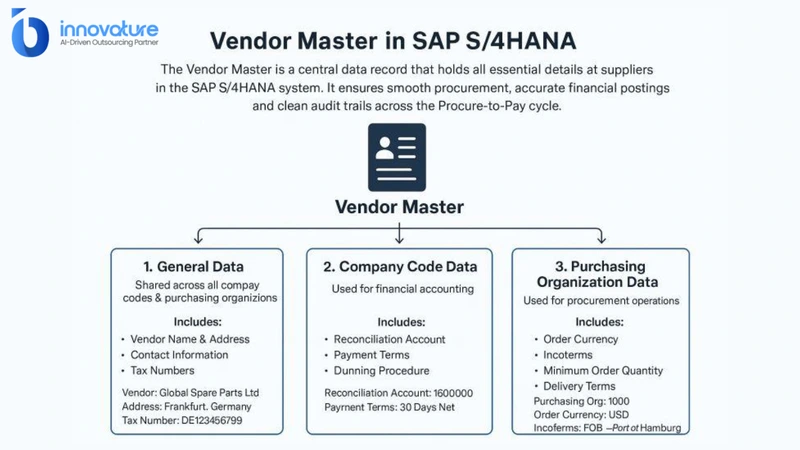
Vendor master data is the core supplier information that Accounts Payable uses to process invoices, approvals, and payments. It typically includes the vendor’s legal name, tax identification number, business address, bank details, payment terms, contact information, and current vendor status.
These records sit at the beginning of the AP process:
Vendor master data → Invoice processing → Approval → Payment
For a broader view of how these stages connect, see the complete accounts payable process from invoice receipt through payment and reconciliation. Because every downstream transaction relies on this information, poor supplier master data can create risk even when the AP workflow itself is functioning correctly.
Vendor master data matters to Accounts Payable for several reasons:
- It determines where payments are sent. If bank details are incorrect or changed without proper verification, an otherwise valid payment can be directed to the wrong account.
- It affects invoice matching and processing accuracy. Duplicate, incomplete, or inconsistent vendor records can cause matching exceptions, duplicate payments, or unnecessary manual review.
- It supports tax and compliance requirements. Missing or outdated tax IDs, legal entity names, or registration details can create reporting and documentation issues.
- It controls whether a vendor should still be used. Inactive or dormant vendors that remain available for transactions can create unnecessary payment and fraud exposure.
- It affects the reliability of AP automation. Automation can enforce workflows and process transactions consistently, but it still depends on the accuracy of the vendor data feeding those workflows.
This is why strong vendor master data controls are more than a data-cleaning exercise. They are part of the broader payment control environment.
The exposure is significant. According to the 2025 AFP Payments Fraud and Control Survey, 79% of organizations experienced attempted or actual payments fraud in 2024, while 63% identified Business Email Compromise as the leading avenue for payment fraud attempts.
For AP teams, the objective is therefore not simply to keep supplier records complete. It is to ensure that vendor data is accurate, authorized, current, and traceable before that data is used to approve or release a payment. Poor master data is also one of several accounts payable challenges that automation alone cannot resolve.
Vendor Master Data Controls Checklist for Accounts Payable
Effective vendor master data controls should cover the full supplier lifecycle, from onboarding and changes to deactivation and reactivation. For AP teams, the goal is to prevent inaccurate, unauthorized, or outdated vendor information from reaching the payment stage.
Use this checklist to review control design and execution. Role names are illustrative and should be mapped to the organization’s approval structure.
| Control Area | Required Check | Suggested Reviewer | Evidence to Retain | If the Check Fails |
|---|---|---|---|---|
| Vendor onboarding | Confirm business need, supplier identity, required documentation, and duplicate-check results before activation. | Business owner and independent vendor approver | Setup request, supporting documents, validation results, approval | Keep the record pending until gaps are resolved. |
| Master-data changes | Verify the request, assess field sensitivity, and approve changes before they take effect. | Authorized reviewer independent of the updater | Request, previous and revised values, verification, approval, timestamps | Hold the change and escalate unresolved discrepancies. |
| Bank-detail changes | Independently confirm new instructions through a previously verified contact channel. | Independent verifier and authorized approver | Verification record, source of contact details, approval, change log | Do not activate or pay to unverified banking details. |
| Duplicate vendors | Compare multiple identifiers and investigate potential matches. | Master Data or AP reviewer | Match results and documented resolution | Pause creation or consolidation until the relationship is understood. |
| Tax information | Check documentation and identifiers required for the supplier’s jurisdiction and classification. | Designated AP or tax reviewer | Applicable forms, validation results, exception approval | Route unresolved requirements to the responsible tax or finance owner. |
| Inactive vendors | Confirm continuing business need and open obligations before blocking or reactivating records. | Business owner and vendor approver | Activity review, status decision, revalidation and approval | Keep reactivation pending until required checks are complete. |
| Access and segregation of duties | Identify conflicting permissions and review privileged access. | Control owner and system-access reviewer | Access listing, conflict review, approvals, remediation | Remove conflicting access or document an approved compensating control. |
Apply onboarding and change controls to each relevant request. Set documented review cycles for duplicates, inactive records, and user access based on risk and transaction volume.
Record each control’s status as Pass, Exception, or Not Applicable, with supporting evidence. Assign unresolved exceptions an owner and due date, and require reviewer sign-off before closure.
Vendor Onboarding and Creation Controls
Effective vendor master data controls begin at onboarding, where AP can prevent poor-quality or unauthorized supplier data from entering the payment process.
Before creating a record, the business requester should explain why the supplier is needed and identify the internal owner of the relationship. The designated business approver should confirm that the request supports a legitimate purchasing requirement.
Complete documentation alone does not establish that a supplier should be added to the approved vendor population.
A standardized vendor setup form should define the required information and documents before activation, such as legal name, Tax ID, registered address, payment terms, bank details, and relevant registration documents.
AP should verify that:
- The vendor identity matches supporting documents;
- Required tax and registration data is complete;
- Bank information follows an approved submission process;
- Potential duplicate matches have been investigated and any legitimate related records documented; and
- All mandatory fields are completed.
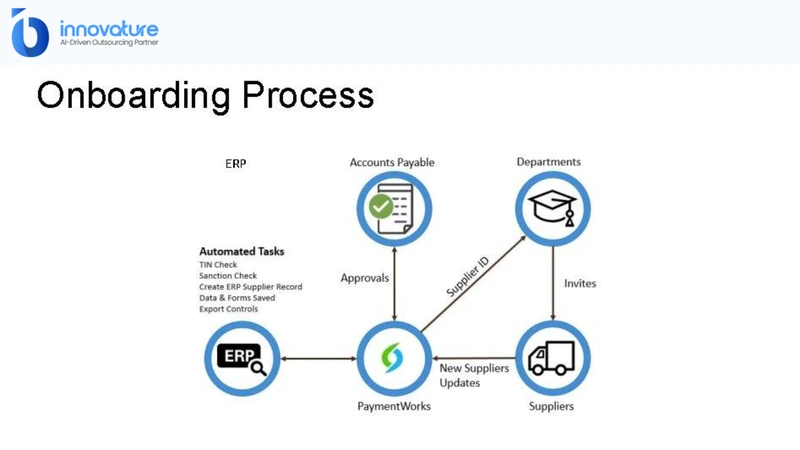
IOFM recommends standardized vendor setup forms, validation procedures, and data-entry rules to reduce fraud, compliance exposure, and poor vendor data.
An authorized reviewer independent of record creation should check the completed setup and approve activation. Retain evidence identifying the requester, creator, reviewer, and approver, together with the supporting documents and approval dates.
Keep incomplete records pending or blocked from payment until required checks are complete. Any approved exception should identify the responsible decision-maker, its scope, and the additional controls required.
Vendor Master Data Change Controls
A vendor record can become a payment risk even if it was accurate at onboarding. Legal names, addresses, contacts, payment terms, tax details, and banking information may all change over time.
Vendor master changes should therefore follow a defined workflow:
Request → Verify → Approve → Update → Record
Define who may request, verify, approve, and implement each type of change. Retain the previous and revised values, reason for the change, supporting evidence, verification result, approver, updater, and timestamps.
Classify changes by their effect on payment and verification. Bank details, legal-entity information, payment methods, and contacts used to confirm payment instructions require heightened scrutiny.
A general administrative contact update may carry less risk. However, changing the email address or telephone number used for bank verification can undermine the verification process itself. Do not use newly supplied contact details to independently validate a related bank-account change.
The Western Australia Office of the Auditor General recommends independent validation and approval of supplier amendments, supported by retained evidence.
Apply equivalent controls to bulk uploads, integrations, and administrator changes wherever these can update vendor records. Confirm that these routes cannot bypass required approvals or change logging.
Vendor Bank-Detail Change Controls
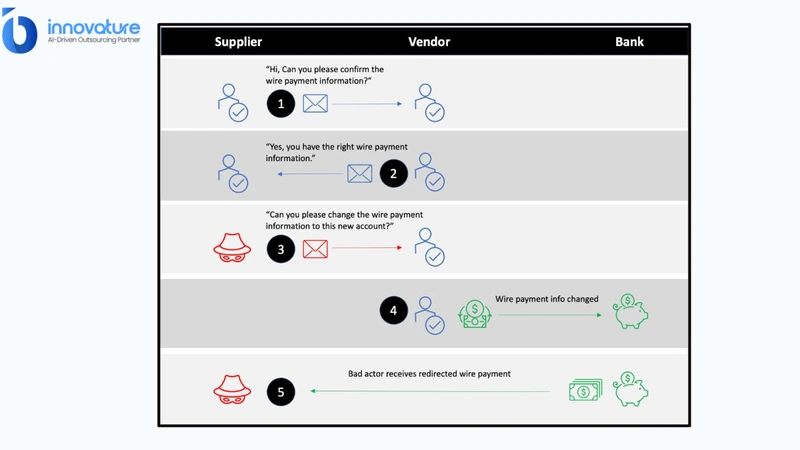
Bank-detail changes are among the highest-risk vendor master updates because they directly determine where funds are sent. A legitimate invoice may pass matching and approval controls but still be paid to the wrong account if vendor banking data has been fraudulently changed.
Treat a request for new payment instructions as a verification task. An email, attached bank letter, or revised invoice does not by itself authorize a change.
Use a documented workflow:
- Log the request. Record the vendor, proposed change, requester, date, and supporting documents.
- Verify independently. Contact an authorized supplier representative through a previously verified telephone number or another independently established channel. Do not rely on contact details supplied in the change request or a newly received invoice.
- Record the result. Document who performed the verification, whom they contacted, where the contact details came from, and what was confirmed.
- Obtain separate approval. An authorized approver should review the verification evidence before the new details take effect.
- Update and check the record. Restrict banking-field access and confirm that the entered details match the approved request. Preserve the change history.
- Review before payment. Before the first payment to the new account, confirm that the approved details are the ones being used in the payment instruction.
The FBI’s guidance on business email compromise reinforces the need to verify changes to account numbers and payment procedures.
If the supplier cannot be reached or the evidence conflicts, keep the change pending and escalate it to the designated finance owner. Urgency should not replace independent verification. Any alternative verification method should be approved, documented, and completed before the new account is used.
For example, a supplier may submit a valid invoice matching an approved purchase order while separately requesting payment to a new account. The invoice can remain valid, but the new payment destination must stay unapproved until the bank-change controls are complete.
Duplicate Vendor Detection and Prevention Controls
Duplicate vendor records can result from different spellings, abbreviations, addresses, vendor IDs, or records created by separate business units. This fragments transaction history and increases the risk of duplicate or erroneous payments.
Before creating a new vendor, AP should search the existing master using multiple identifiers, including legal name, Tax ID, bank account, address, email/domain, and other unique identifiers.
Duplicate checks should also continue after onboarding through periodic vendor master reviews.
A match is a reason to investigate, not automatic proof that records should be merged or deleted. Separate supplier sites, legal entities, or ERP structures may legitimately share some information. Document these relationships and distinguish them from unintended duplicates.
Before consolidating records, review open invoices, purchase orders, credits, payment history, and reporting dependencies. Preserve transaction traceability and obtain the required approval.
APQC’s benchmark reports a median duplicate-or-erroneous-payment rate of 1.5% across 1,686 companies. This measures the number of disbursements, not the percentage of payment value lost, and does not attribute every error to duplicate vendor records.
The objective is a controlled supplier structure with clear relationships, reliable identifiers, and no unexplained duplicate records.
Vendor Tax Information and Compliance Controls
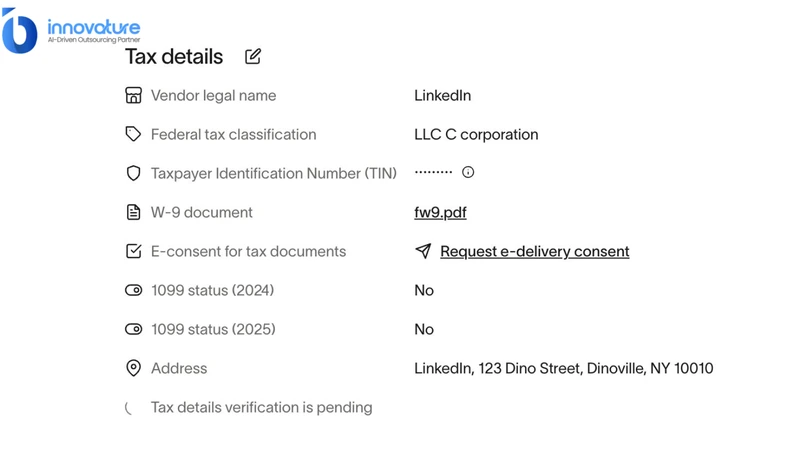
Accurate tax and registration data is a core part of a reliable vendor master. Before activation, AP should confirm that tax identifiers, legal entity names, registration details, and required documents are complete and consistent.
These records also need ongoing maintenance. Changes to legal names, addresses, ownership, or tax identifiers can create reporting issues if the vendor master is not updated.
For U.S. reporting, IOFM highlights legal-name and Taxpayer Identification Number mismatches as a common sign of poor vendor master data.
Define required tax fields and documents by supplier jurisdiction, entity type, and reporting obligations. Record legitimate exceptions so missing information can be distinguished from information that is not applicable.
Review documentation when relevant supplier circumstances change and track expiration dates only where applicable. Route unresolved tax requirements to the designated tax or finance owner rather than applying the same document rules to every supplier.
Tax-related changes should remain subject to authorization, supporting evidence, and a traceable change history.
Inactive and Dormant Vendor Controls
Vendor records can become a control risk when they remain active after the supplier is no longer used. Dormant records may contain outdated bank, tax, or contact information and can be reused accidentally or without authorization.
Organizations should define clear inactive-vendor criteria based on transaction history, contract status, or business need.
Before changing a vendor’s status, check open purchase orders, unpaid invoices, outstanding credits, and any continuing contractual need. Distinguish a block on new purchasing from a payment block so legitimate outstanding obligations receive the appropriate treatment.
AP should periodically review vendors with little or no recent activity and block or deactivate records that are no longer required. Historical records should generally be retained for audit and reporting rather than deleted.
The Office of the Auditor General recommends separating active and inactive supplier records, documenting status changes, and maintaining a defined reactivation process.
Reactivation should require a documented business reason and independent approval. Revalidate relevant identity, tax, banking, and contact information, and apply the bank-change workflow if payment details have changed.
Retain the previous status, reactivation request, verification evidence, approver, and effective date.
Vendor Approval Ownership, Access Controls and Segregation of Duties
Strong vendor master controls require clear ownership of who can request, verify, approve, and change vendor information.
A practical responsibility chain may follow:
Requester → Reviewer/Verifier → Approver → Master Data Administrator
The exact structure may vary, but no single employee should be able to create a vendor, change sensitive information, approve the change, and release the related payment.
Access to sensitive vendor master fields should therefore be role-based and reviewed periodically.
The ACFE 2024 Report to the Nations found that 32% of occupational fraud cases involved a lack of internal controls, while 19% involved the override of existing controls. A typical fraud scheme continued for about 12 months before detection.
For AP teams, governance should focus on:
- Approval ownership: define who approves vendor creation and high-risk changes.
- Access control: restrict create, edit, approve, and payment rights by role.
- Exception escalation: require additional review for unusual or high-risk requests.
Assess conflicting permissions across the ERP and payment systems together. Separating roles within the vendor module provides limited protection if the same user can also release payments through another system.
Where a smaller team cannot fully separate every activity, document the conflict and establish a compensating control. For example, an independent finance leader can review supporting evidence and sensitive changes before related payments are released.
Periodic exception review can supplement this control, but should not replace verification and approval before payment to a newly changed bank account.

How to Monitor and Review Vendor Master File Controls
Monitoring should confirm that vendor master data controls operate as intended and that identified exceptions are resolved. Combine review of sensitive changes before use with periodic checks of the wider supplier population.
Useful exception reports include:
- Bank changes awaiting verification or approval;
- Changes to verification contacts followed by banking changes;
- New or reactivated vendors with missing approval evidence;
- Multiple records sharing bank accounts or other key identifiers;
- Inactive vendors appearing in payment proposals;
- Changes made through privileged accounts, uploads, or integrations; and
- Users holding conflicting vendor-maintenance and payment permissions.
Investigate flagged records before concluding that they represent fraud or error. Some shared details or multiple records may have legitimate explanations that should be documented.
Maintain an exception register showing the vendor, issue, risk level, date identified, owner, due date, action taken, and reviewer sign-off. An exception is closed when its resolution has been checked and supported by evidence.
Set review frequency according to risk, transaction volume, and system capabilities. Review high-risk changes before they affect payment; schedule broader duplicate, inactive-vendor, and access reviews under a documented control calendar.
Track unresolved exceptions, overdue corrective actions, and sensitive changes lacking required evidence. These measures show where control execution needs attention.
How Innovature Helps Strengthen Vendor Master Data Controls
Innovature provides Finance & Accounting outsourcing services that can support recurring AP operations within a client-defined control framework.
Depending on the agreed scope, vendor-related support may include collecting setup documents, preparing records for review, tracking missing information, maintaining exception logs, and preparing vendor-change reports.
Define responsibilities before handover. The operating model should identify who verifies supplier information, who approves sensitive changes, who may update records, and who authorizes payment release. Client management should retain policy ownership, approval of material exceptions, and final payment authority.
Specific activities such as bank-detail verification or vendor-master maintenance should be included only where the agreed procedures, system permissions, and review requirements support them.
Discuss your AP workflow with Innovature to identify where additional execution capacity and clearer control ownership could support your finance team.
Vendor Master Data Controls FAQs
What Are the Key Vendor Master Data Controls?
Key vendor master data controls include vendor onboarding and validation, approval of master-data changes, independent verification of bank details, duplicate-vendor checks, tax-data validation, inactive-vendor reviews, and role-based access with segregation of duties. Together, they help prevent inaccurate or unauthorized supplier data from reaching payment workflows.
How Should Vendor Bank-Detail Changes Be Verified?
Verify the request through a previously verified supplier contact or another independently established channel. Do not use contact details provided only in the change request. Retain verification evidence, obtain separate approval, and check the updated information before the first payment to the new account.
How Can AP Prevent Duplicate Vendors?
Search existing records using multiple identifiers before creating a vendor, and perform periodic duplicate reviews. Investigate matches before merging records because supplier sites or legal entities may legitimately share information. Document approved relationships and preserve transaction history when resolving unintended duplicates.
Who Should Approve Vendor Master Data Changes?
An authorized approver independent of the employee making the change should review the supporting evidence. Sensitive changes require appropriate verification before approval. If staffing limits full separation, document the conflict and require an independent compensating review before the change affects payment.
How Often Should Vendor Master Data Be Reviewed?
There is no single review frequency for every organization. Review cycles should reflect transaction volume, supplier risk, regulatory requirements, and internal policy. High-risk changes should be monitored as they occur, while duplicates, inactive vendors, tax data, and user access should be reviewed periodically.
Can AP Automation Prevent Payments to the Wrong Vendor?
AP automation can reduce processing errors and enforce approval rules, but it cannot guarantee that payments reach the correct recipient. If supplier banking data is incorrect or compromised, an otherwise valid invoice may still be paid to the wrong account. Independent verification, controlled changes, and payment-release checks remain necessary.


Finance leaders are under pressure to strengthen controls, close faster, improve data quality, and support business decisions without…

Accounts receivable aging analysis helps finance teams evaluate unpaid customer invoices, identify overdue exposure, and decide which balances…

Finance outsourcing governance is a framework that defines roles, decision rights, internal controls, and provider oversight when finance…

Selecting a finance outsourcing provider does not make a finance process ready to move. Before operational ownership changes…

PayrollOrg’s 2025 survey found that 38% of organizations do not track payroll performance, showing that payroll oversight remains…
Payroll accuracy often breaks down before payment is even made. PayrollOrg’s 2025 global survey identified poor-quality input data,…
Intercompany balances become harder to control as businesses add legal entities, currencies, systems, and cross-border transactions. A single…

An accounting quality control checklist helps Controllers and Finance Managers verify whether bookkeeping data is accurate, supported, and…

Month-end close often becomes harder as growing companies process more invoices, payments, reconciliations, and reporting requirements. Without a…

Accounts payable journal entries record what a business owes suppliers and how those obligations change over time. A…

Financial statements analysis is the process of examining a company’s income statement, balance sheet, and cash flow statement…

An offshore accounting strategy defines which finance work should move offshore, how that work will be delivered, who…
Ready to move faster?
Trust us to find the best-fit candidates while you concentrate on building a skilled and diverse remote team.