
2026 Tax Season Deadlines: Key Dates for Businesses
Last updated:

The main 2026 tax season deadlines depend on how a business is structured. Calendar-year partnerships and S corporations generally filed 2025 returns by March 16, 2026, while calendar-year C corporations and most individuals had an April 15 deadline. Extensions, estimated tax payments, payroll filings, and information returns follow separate schedules.
For businesses, tax season is therefore not one date.
Finance teams may need to manage:
information reporting → entity returns → estimated payments → extensions → payroll filings
throughout the year.
As of August 2026, the next major federal dates include September 15, 2026 for the third individual estimated tax installment and extended calendar-year partnership/S corporation returns, followed by October 15, 2026 for many extended individual and C corporation returns.
Note: This guide focuses on key U.S. federal dates for calendar-year taxpayers. State, local, fiscal-year, industry-specific, disaster-relief and other requirements may differ. Businesses should confirm the dates that apply to their circumstances with the IRS and their tax adviser.

2026 Tax Season Deadlines at a Glance
The most important tax season deadlines are summarized below for calendar-year taxpayers, but businesses should confirm which dates apply to their entity type and filing requirements.
| Date | Key Federal Deadline |
|---|---|
| January 15, 2026 | Final 2025 estimated tax installment for many individuals |
| January 26, 2026 | IRS 2026 individual filing season opened |
| February 2, 2026 | W-2s and certain annual information statements due |
| March 16, 2026 | Calendar-year partnerships and S corporations |
| April 15, 2026 | Individual returns and calendar-year C corporations |
| April 15, 2026 | First 2026 individual estimated tax installment |
| June 15, 2026 | Second individual estimated tax installment |
| September 15, 2026 | Third individual estimated tax installment |
| September 15, 2026 | Extended partnerships and S corporations |
| October 15, 2026 | Extended individuals and calendar-year C corporations |
| January 15, 2027 | Final 2026 individual estimated tax installment |
The IRS officially opened the 2026 filing season on January 26, 2026, with the regular individual filing and payment deadline falling on April 15, 2026.
For the complete federal calendar, businesses should use the current IRS Publication 509. IRS Publication 509: 2026 Tax Calendars
Why Tax Deadlines Differ by Business Structure
One of the most common tax-calendar mistakes is assuming every business files on April 15.
Understanding tax season deadlines by entity type helps finance teams separate partnership, S corporation, C corporation, and individual filing requirements before the year-end workload begins.
The deadline depends on the entity.
Sole Proprietors and Single-Member LLCs
For federal income tax purposes, many sole proprietors report business activity as part of their individual return.
For most calendar-year individual taxpayers, the 2025 federal return and tax payment were due:
April 15, 2026
The business may also need to make estimated tax payments during 2026.
Partnerships
Calendar-year partnerships generally file Form 1065.
For the 2025 tax year, the deadline fell on:
March 16, 2026
because March 15 fell on a Sunday.
Partnerships also provide applicable Schedule K-1 or K-3 information to partners.
A timely Form 7004 generally provides an automatic six-month filing extension.
For calendar-year partnerships that requested the extension, the 2026 extended filing deadline is:
September 15, 2026
S Corporations
Calendar-year S corporations generally file Form 1120-S.
The 2025 return was due:
March 16, 2026
because March 15 fell on a Sunday.
A timely Form 7004 generally extends the filing deadline by six months.
The extended deadline is therefore:
September 15, 2026
for a calendar-year S corporation with a valid extension.
C Corporations
Calendar-year C corporations generally file Form 1120 by the 15th day of the fourth month after year-end.
For calendar-year 2025 returns:
April 15, 2026
was the regular federal filing deadline.
A calendar-year corporation that timely requested the standard six-month extension generally files by:
October 15, 2026
Fiscal-year corporations can follow a different schedule.
2026 Business Tax Deadlines by Entity
| Business Type | Regular 2026 Filing Deadline* | Extended Deadline* | Main Federal Form |
|---|---|---|---|
| Sole proprietor | Apr. 15, 2026 | Oct. 15, 2026 | Form 1040 + Schedule C |
| Partnership | Mar. 16, 2026 | Sept. 15, 2026 | Form 1065 |
| S corporation | Mar. 16, 2026 | Sept. 15, 2026 | Form 1120-S |
| C corporation | Apr. 15, 2026 | Oct. 15, 2026 | Form 1120 |
*Calendar-year taxpayers and standard extensions. Special situations can produce different dates.
Understanding these tax season deadlines is particularly important for businesses operating through multiple entities because Finance may need to prepare several returns and supporting schedules on different timelines.
Tax Extensions Give More Time to File, Not More Time to Pay
This distinction should be explicit.
When planning tax season deadlines, businesses should track filing dates and payment dates separately because an approved filing extension does not generally postpone the tax itself.
An extension normally provides additional time to file the return.
It does not automatically postpone the underlying tax payment.
For individuals, the IRS states that Form 4868 can provide an automatic six-month extension, but tax owed generally remains due on the original filing deadline. For 2026, the extended individual filing date is October 15.
Individual Extension
Typical form:
Form 4868
Regular deadline:
April 15, 2026
Extended filing deadline:
October 15, 2026
Business Extension
Partnerships, S corporations and many C corporations use:
Form 7004
Calendar-year partnership/S corporation:
March 16 → September 15
Calendar-year C corporation:
April 15 → October 15
The finance team should therefore distinguish:
return preparation deadline
from
payment deadline
when planning tax-season workload.
2026 Estimated Tax Payment Deadlines
Tax responsibilities do not end when the annual return is filed.
Estimated payments are also part of the broader tax season deadlines calendar, so businesses and self-employed taxpayers should track them separately from annual return filing dates.
Individuals including many self-employed taxpayers may need to make estimated tax payments during the year.
The IRS schedule for 2026 is:
| Income Period | Estimated Payment Due |
|---|---|
| Jan. 1–Mar. 31 | Apr. 15, 2026 |
| Apr. 1–May 31 | Jun. 15, 2026 |
| Jun. 1–Aug. 31 | Sept. 15, 2026 |
| Sept. 1–Dec. 31 | Jan. 15, 2027 |
As of August 2026, the next standard individual estimated tax deadline is:
September 15, 2026
followed by:
January 15, 2027.
IRS guidance on estimated tax payments
Corporate Estimated Tax Deadlines
Corporations may also need to make estimated tax payments.
For a calendar-year corporation, the general installment schedule is based on the 15th day of the:
- fourth month,
- sixth month,
- ninth month,
- twelfth month
of the corporation’s tax year.
For a calendar-year corporation, that generally corresponds to:
April 15
June 15
September 15
December 15
The actual requirement and amount depend on the corporation’s tax position, so businesses should confirm applicability rather than assuming every company follows the same payment profile.
Employer Reporting Deadlines Also Matter
Income-tax returns are only one part of the calendar.
Companies with employees or contractors may have additional reporting responsibilities.
Forms W-2
Employers were generally required to provide employee W-2 statements and submit required W-2 information by:
February 2, 2026
because January 31 fell on a Saturday.
Forms 1099
Different Forms 1099 can have different filing and furnishing deadlines.
Businesses should avoid treating “all 1099s” as having one universal deadline.
The safest approach is to identify:
- Which information return is required
- Who receives it
- Whether it is filed electronically or on paper
- The relevant IRS deadline
This is one reason tax-calendar planning should begin before January rather than after year-end close.
Payroll Tax Deadlines Run Throughout the Year

Businesses with employees may also need to manage recurring:
- payroll tax deposits,
- Form 941 filings,
- FUTA requirements,
- withholding obligations.
For example, the IRS calendar lists April 30, 2026 as the deadline for employers to file Form 941 for the first quarter.
Deposit timing can depend on whether the employer follows:
- monthly,
- or semiweekly
deposit rules.
This means a business tax calendar should not contain only the annual income-tax return.
For payroll-heavy businesses, recurring payroll compliance can create more calendar events than the return itself.
What If Your Business Uses a Fiscal Year?
The dates above primarily apply to calendar-year taxpayers.
Fiscal-year entities generally determine filing dates relative to the end of their own tax year.
For example, IRS Publication 509 states generally:
Individuals
Form 1040/1040-SR:
15th day of the fourth month after tax year-end.
Partnerships
Form 1065:
15th day of the third month after tax year-end.
S Corporations
Form 1120-S:
15th day of the third month after tax year-end.
C Corporations
Form 1120:
generally the 15th day of the fourth month after tax year-end, subject to special rules in some circumstances.
Businesses using a fiscal year should therefore build their tax calendar from their actual year-end rather than copying a standard March/April schedule.
What Happens If a Tax Deadline Falls on a Weekend or Holiday?
A tax date can move when the statutory due date falls on:
- Saturday
- Sunday
- Legal holiday
The due date generally shifts to the next qualifying business day.
That is exactly why calendar-year partnerships and S corporations had a March 16, 2026 filing deadline instead of March 15.
Finance teams should therefore verify the actual date each year rather than simply copying last year’s calendar.
Disaster Relief Can Change Tax Deadlines
The IRS can postpone certain filing and payment dates for taxpayers affected by federally declared disasters.
Relief can differ by:
- Location
- Disaster
- Taxpayer type
- Form
- Original deadline
The Taxpayer Advocate Service specifically notes that disaster-affected taxpayers may qualify for postponed deadlines.
Businesses operating across multiple states should verify whether relief applies to the relevant entity or taxpayer before assuming a standard federal deadline remains unchanged.
The Tax Deadline Checklist for Finance Teams
Knowing the tax season deadlines is only useful if finance can produce the required information on time.
Before filing season, check whether the business has completed:
Revenue Reconciliation
Confirm that:
- Sales records
- Customer invoices
- Cash receipts
- General ledger revenue
are consistent.
Accounts Receivable Review
Review:
- Open invoices
- Unapplied cash
- Write-offs
- Credit balances
- Bad debts
Accounts Payable Review
Confirm:
- Supplier invoices are recorded
- Duplicate payments are resolved
- Unpaid liabilities are complete
- Expense coding is correct
Bank and Credit Card Reconciliation
Unreconciled accounts can create incorrect income or expense balances.
Payroll Records
Reconcile:
- Payroll expense
- Employee wages
- Payroll liabilities
- W-2 information
- Tax deposits
Fixed Assets
Review:
- Asset additions
- Disposals
- Depreciation
- Supporting invoices
Supporting Documents
Collect:
- Invoices
- Receipts
- Bank statements
- Payroll records
- Loan documentation
- Tax forms
- Other supporting schedules
A practical tax season deadlines calendar should therefore include internal accounting cut-offs several weeks before the statutory filing dates.
For a more detailed preparation list, use Innovature’s Complete Tax Documents Checklist.
Missing a Deadline: Filing Late vs. Paying Late
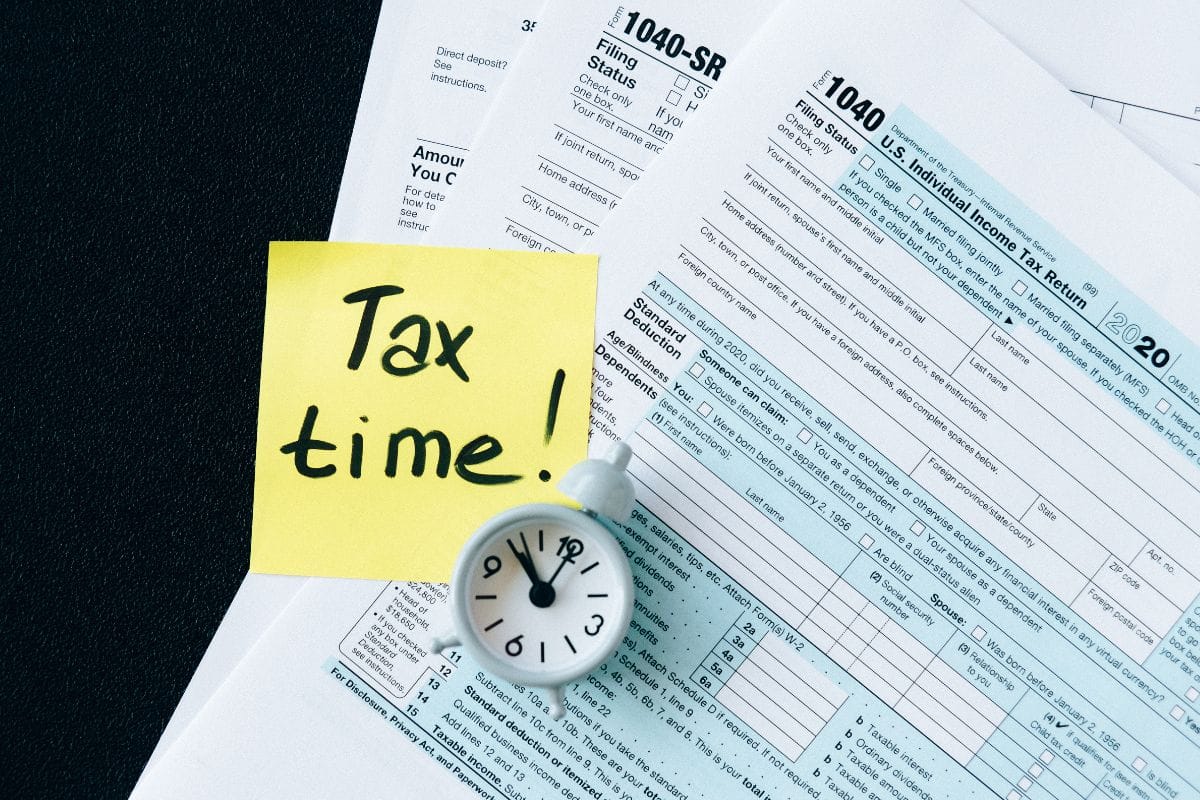
A late return and a late tax payment are different problems.
Businesses should not assume:
“If we cannot pay, there is no reason to file.”
For individual federal income tax, the IRS explicitly encourages taxpayers to file by the deadline even when they cannot pay the full balance because filing and payment requirements have different consequences.
When a business expects difficulty meeting a deadline:
- Confirm exactly which obligation is due.
- Determine whether an extension is available.
- Estimate any payment still required.
- Contact the relevant tax professional or authority before the deadline.
- Keep evidence of filings and payments.
Do not wait until the return is already late to investigate the available options.
Why Tax Readiness Should Start Before Tax Season
Tax preparation often exposes accounting problems that already existed throughout the year.
Common examples include:
- Unreconciled bank accounts
- Missing invoices
- Incorrect expense coding
- Incomplete vendor data
- Historical AR/AP balances
- Poor supporting documentation
- Fixed-asset records that have not been updated
These are not primarily filing problems.
They are finance operations problems.
Preparing for tax season deadlines throughout the year reduces the amount of reconciliation, document recovery, and account cleanup that must be completed immediately before filing.
A better process is:
record correctly → reconcile regularly → close consistently → prepare tax schedules
rather than:
wait until tax season → rebuild the year
Businesses can also review Small Business Tax Deductions before year-end to make sure legitimate expenses are documented and classified appropriately.
When Tax Season Creates a Finance Capacity Problem
Tax season can create a temporary workload spike even when the underlying finance process is sound.
As tax season deadlines approach, the pressure is often highest when year-end close, BAU accounting, tax schedules, and adviser requests all compete for the same finance resources.
Internal teams may simultaneously need to manage:
- BAU accounting
- Year-end close
- Reconciliations
- Tax schedules
- Auditor/tax-adviser requests
- Payroll and information reporting
The first step is to identify whether the constraint is:
missing data
broken process
or
insufficient capacity
External support is most useful for the third category and for structured cleanup work where responsibilities can be clearly defined.
Innovature supports Finance & Accounting operations across AP, AR, GL, reconciliation, reporting and financial-record preparation.
Businesses needing additional finance capacity can explore Innovature Finance & Accounting Outsourcing Services or speak with the team about workload and operating requirements.
Frequently Asked Questions About Tax Season Deadlines
1. When did the 2026 U.S. tax filing season begin?
The IRS began accepting and processing 2025 individual federal income tax returns on January 26, 2026.
2. What was the 2026 individual tax filing deadline?
For most calendar-year individuals, the federal filing and payment deadline was April 15, 2026.
3. When are partnership taxes due in 2026?
Calendar-year partnerships generally filed Form 1065 by March 16, 2026. A partnership with a valid six-month extension generally files by September 15, 2026.
4. When are S corporation returns due in 2026?
Calendar-year S corporations generally filed Form 1120-S by March 16, 2026. The standard extended filing date is September 15, 2026.
5. When are C corporation returns due in 2026?
A calendar-year C corporation generally filed Form 1120 by April 15, 2026. A timely six-month extension generally moves the filing deadline to October 15, 2026.
6. Does a tax extension also extend the payment deadline?
Generally, no.
For individuals, an extension provides extra time to file but does not automatically provide extra time to pay tax due.
7. When is the next 2026 estimated tax deadline?
As of August 2026, the next standard individual estimated tax payment is due September 15, 2026. The following installment is generally due January 15, 2027.
8. Do states follow the same tax deadlines as the IRS?
Not necessarily.
State filing, payment, extension and disaster-relief rules can differ from federal requirements.
Build the Tax Calendar Around the Business, Not One Date
The most important lesson about tax season deadlines is that tax compliance is not centered on one April deadline.
A business may need to coordinate:
February information reporting
March entity returns
April individual and corporate returns
quarterly estimated payments
September and October extensions
plus recurring payroll obligations throughout the year.
The best tax calendar therefore begins with the company’s:
entity structure → tax year → employees → payment obligations → state footprint
and maps each requirement to a responsible owner.
Meeting the filing date becomes much easier when the accounting records behind the return are already complete, reconciled and ready for review.


Finance leaders are under pressure to strengthen controls, close faster, improve data quality, and support business decisions without…

Vendor master data controls govern how supplier records are created, verified, approved, changed, and deactivated before they are…

Accounts receivable aging analysis helps finance teams evaluate unpaid customer invoices, identify overdue exposure, and decide which balances…

Finance outsourcing governance is a framework that defines roles, decision rights, internal controls, and provider oversight when finance…

Selecting a finance outsourcing provider does not make a finance process ready to move. Before operational ownership changes…

PayrollOrg’s 2025 survey found that 38% of organizations do not track payroll performance, showing that payroll oversight remains…
Payroll accuracy often breaks down before payment is even made. PayrollOrg’s 2025 global survey identified poor-quality input data,…
Intercompany balances become harder to control as businesses add legal entities, currencies, systems, and cross-border transactions. A single…

An accounting quality control checklist helps Controllers and Finance Managers verify whether bookkeeping data is accurate, supported, and…

Month-end close often becomes harder as growing companies process more invoices, payments, reconciliations, and reporting requirements. Without a…

Accounts payable journal entries record what a business owes suppliers and how those obligations change over time. A…

Financial statements analysis is the process of examining a company’s income statement, balance sheet, and cash flow statement…
Ready to move faster?
Trust us to find the best-fit candidates while you concentrate on building a skilled and diverse remote team.