
10 Outsourced Accounting Firms to Compare in 2026
Last updated:

10 Outsourced Accounting Firms: Best Fit by Business Need
Choosing between outsourced accounting firms is difficult because providers that appear similar on a shortlist can operate very different delivery models. One may provide a dedicated offshore accounting team, another may take responsibility for an entire finance process, while another primarily combines bookkeeping software with professional support.
Short answer: US companies usually compare four types of providers: US CPA firms and the Big 4 for advisory-heavy or audit-sensitive work, large managed F&A providers such as Genpact for enterprise transformation, dedicated offshore teams such as Innovature BPO, Personiv, TOA Global, and Outsourced for added execution capacity, and bookkeeping or fractional models such as Pilot, Botkeeper, and Paro for smaller or specialist needs. The right choice depends on what the business wants to transfer, not on a single ranking.
That distinction matters more than the size of the provider. A growing mid-market company that needs AP, AR, General Ledger, reconciliations, and close support has a different requirement from a CPA firm looking for additional accountants or a startup that needs bookkeeping, tax, and fractional CFO support in one package.
Gartner defines Finance and Accounting Business Process Outsourcing as third-party delivery of processes such as purchase-to-pay, order-to-cash, and record-to-report, increasingly supported by automation and process-transformation capabilities. Its 2026 research also highlights governance, service-delivery flexibility, workforce capability, process technology, and knowledge transfer as important areas when evaluating F&A BPO providers.
This guide therefore compares providers by operating fit rather than creating an artificial universal ranking.
Disclosure: This article is published by Innovature BPO, which is included in the comparison. Providers are not ranked from best to worst. The comparison is based on publicly available service scope, delivery model, target buyer, geographic model, technology approach, and evidence available from each provider.
Key takeaways
- Decide on the operating model first, then compare providers within that group.
- US CPA firms and the Big 4 suit work that needs US accounting judgment, tax, or advisory depth. They are rarely the lowest-cost option for high-volume processing.
- Large managed providers fit multi-entity, multi-ERP transformation. Dedicated offshore teams fit companies with strong internal finance leadership that need more capacity.
- Compare total operating cost, not hourly rates.
- Ask every provider which approvals and financial decisions stay with your team.
How We Compared Outsourced Accounting Firms
The right provider depends first on what the buyer actually wants to transfer. Some companies need additional accounting capacity under their own management. Others want a provider to operate a defined process against agreed controls and service levels. Accounting firms may need offshore talent, while startups may prefer an integrated bookkeeping and CFO service.
When reviewing outsourced accounting firms, we considered five practical questions: what finance work the provider supports, how the delivery model operates, what type of buyer it appears best suited to, where the work is delivered, and what important limitation or trade-off a buyer should investigate before signing.
Quick Comparison
| Provider | Best Fit | Primary Model | Main Consideration |
|---|---|---|---|
| Auxis | Mid-market companies prioritizing nearshore collaboration | Managed F&A / transformation | Best value where time-zone alignment matters |
| Botkeeper | Accounting firms expanding bookkeeping capacity | AI-enabled platform + services | More specialized than full F&A BPO |
| Genpact | Large and complex global enterprises | Enterprise managed F&A | May be more extensive than smaller buyers need |
| Innovature BPO | Mid-market companies building dedicated offshore finance capacity | Dedicated / co-managed teams | Define which activities remain under client ownership |
| Outsourced | Companies hiring dedicated accounting staff in the Philippines | Offshore staffing | Buyer retains more direct management responsibility |
| Paro | Businesses needing fractional or specialist finance expertise | On-demand expert talent | Different economics from offshore BPO |
| Personiv | Mid-market companies scaling transactional and FP&A capacity | Dedicated F&A teams | Clarify scope ownership and governance |
| Pilot | Startups and smaller businesses | Bookkeeping + tax + CFO | Less suited to complex enterprise F&A |
| QX Global | Companies seeking India-based F&A delivery | Managed outsourcing | Evaluate sector and process fit |
| TOA Global | CPA and accounting firms with recurring talent needs | Dedicated offshore accounting talent | Primarily oriented toward accounting firms |
These providers are not interchangeable. The purpose of the table is to reduce the shortlist according to the operating model a buyer needs before moving into detailed RFP evaluation.
The strongest outsourced accounting firms should therefore be compared by delivery model and process fit before buyers compare individual features or rates.
10 Outsourced Accounting Firms to Compare in 2026
Auxis: Best for Nearshore Finance Operations

Auxis combines accounting outsourcing with finance transformation and nearshore delivery. Its current accounting offering focuses on areas such as close, reconciliations, accounting operations, automation, and finance process improvement, with delivery designed around greater working-day overlap with U.S. teams.
This makes Auxis particularly relevant for mid-market and enterprise finance teams where real-time collaboration is a priority. Buyers that need judgment-intensive work, frequent interaction with U.S. stakeholders, or finance transformation alongside day-to-day execution may place greater value on the nearshore model.
Best fit: Companies prioritizing collaboration, transformation, and time-zone overlap.
Review carefully: How transformation/advisory work is priced separately from steady-state process delivery.
Botkeeper: Best for Accounting Firms Seeking AI-Enabled Bookkeeping

Botkeeper takes a more specialized approach. It is designed primarily for accounting firms that want to increase bookkeeping capacity through automation and dedicated service support rather than build a conventional offshore finance department.
Its platform focuses on transaction categorization, bank reconciliations, journal entries, close workflows, and integration with systems such as QuickBooks Online and Xero. Botkeeper states that its solution has supported more than 200 accounting firms and thousands of business clients.
This model can work well when the core requirement is high-volume bookkeeping automation. Businesses seeking tax advice, broader FP&A, or complete finance-process ownership should confirm what is provided directly and what requires another accounting partner; Botkeeper itself states that it does not provide tax, legal, or financial advice directly.
Best fit: Accounting firms seeking technology-enabled bookkeeping scale.
Review carefully: Whether the required scope extends beyond bookkeeping and pre-accounting.
Genpact: Best for Large Enterprise Finance Transformation
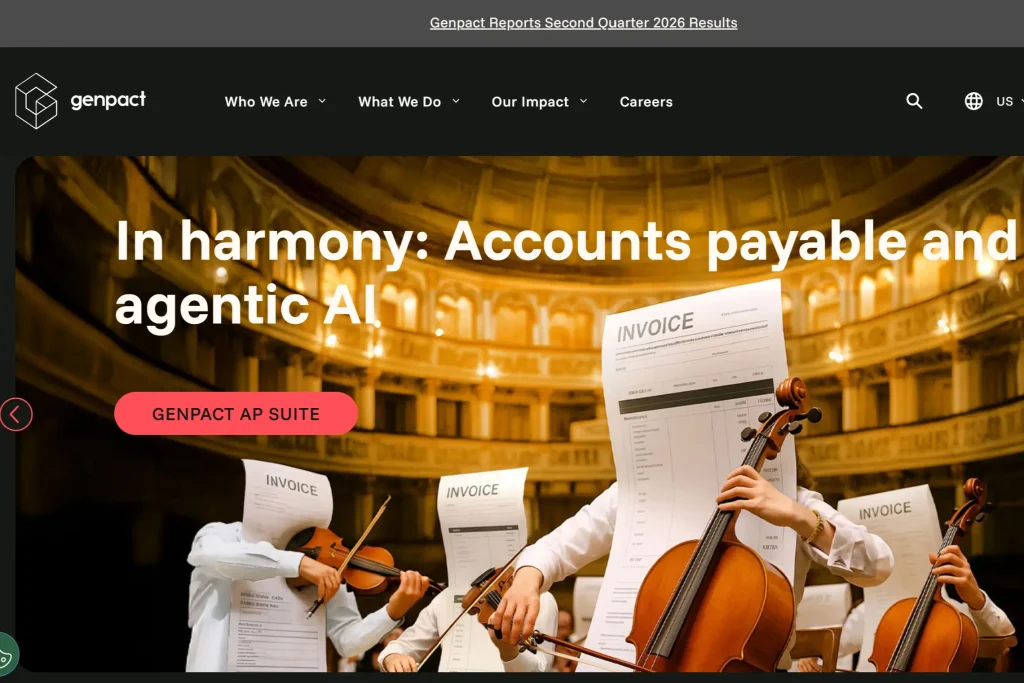
Genpact operates at the enterprise end of the market, combining managed finance operations with consulting, automation, analytics, and transformation.
Its current F&A portfolio covers accounts payable, invoice-to-cash, record-to-report, financial planning and analysis, and finance consulting. Genpact states that it supports more than 320 enterprises across 30 countries within its finance operations portfolio.
For multinational organizations with complex processes, multiple systems, and transformation requirements, that scale can be valuable. Gartner’s 2026 Finance and Accounting BPO research also includes Genpact among the large global providers evaluated in the market.
The same breadth may be excessive for a mid-sized company that simply needs five accountants added to an existing workflow.
Best fit: Large enterprises seeking end-to-end process transformation and managed F&A.
Review carefully: Whether the organization’s scale and transformation requirements justify an enterprise-level engagement.
Innovature BPO: Best for Dedicated Offshore Finance Teams

Innovature BPO provides Finance & Accounting capacity through talent hubs in Vietnam and the Philippines. Its model supports both dedicated teams managed by the client and co-managed arrangements where Innovature provides additional operating and quality oversight. Current capabilities include AP, AR, General Ledger, reconciliations, bookkeeping, reporting, payroll support, and other recurring finance processes.
The model is particularly relevant for mid-market organizations that want more control over the people performing the work than they might receive in a large pooled BPO environment. Innovature also maintains a wider talent database of more than 15,000 profiles across its outsourcing operations.
First-party cases provide evidence of the operating model. In one engagement with a US$1B+ U.S. IT staffing enterprise, Innovature mobilized 29 offshore specialists within three months. Across the broader shared-service operation, the client achieved more than US$1.2 million in annual savings, a 30% faster month-end close, and SLA performance that reached 97% after 12 months. These are engagement-specific outcomes rather than universal expectations.
Best fit: Mid-market and enterprise buyers seeking dedicated offshore F&A teams with Vietnam and Philippines delivery.
Review carefully: Which processes Innovature will manage versus which approvals and financial decisions remain with the client’s finance leadership.
Outsourced: Best for Dedicated Philippines-Based Accounting Staff

Outsourced focuses heavily on dedicated offshore staffing from the Philippines. Its finance talent offering includes accountants, bookkeepers, AP resources, collections support, payroll roles, and other finance specialists.
The provider also recruits staff with experience in accounting systems including QuickBooks, Xero, NetSuite, SAP, MYOB, Sage, and Microsoft Dynamics.
The model is closer to building an offshore extension of the client’s own team than transferring a complete finance process to a managed BPO provider. That distinction can be beneficial for companies that already have strong internal finance leadership and simply need more execution capacity.
Best fit: Businesses that want dedicated accounting staff and are comfortable retaining direct workflow management.
Review carefully: How much supervision, process ownership, QA, and backup coverage are included beyond recruitment and staffing.
Paro: Best for Fractional and Specialist Finance Expertise

Paro operates differently from most offshore providers on this list. Its model gives businesses access to fractional and on-demand finance professionals across accounting, bookkeeping, controller work, FP&A, tax, and CFO-level services.
Paro currently states that its network includes more than 1,000 finance and accounting experts across 60+ industries and more than 250 skill sets, with the top 2% of applicants entering its talent network.
That makes Paro useful when the problem is specialized expertise rather than high-volume offshore processing. A business may use Paro to fill an interim controller role, execute a finance project, or add fractional expertise without hiring permanently.
Best fit: Companies needing U.S.-oriented specialist, fractional, or project-based finance expertise.
Review carefully: Cost economics if the requirement is large-scale transactional execution rather than specialist work.
Personiv: Best for Flexible Dedicated F&A Teams
Personiv offers dedicated finance teams that can scale from individual resources to much larger operations. Its service scope spans procure-to-pay, order-to-cash, record-to-report, AP, AR, General Accounting, payroll support, FP&A, and financial reporting.
This breadth makes Personiv relevant for mid-market companies that want to start with a small offshore team and expand the model as volume grows. The provider emphasizes customized teams rather than requiring clients to adopt proprietary accounting software.
Best fit: Finance organizations that want dedicated offshore capacity across transactional accounting and higher-level finance support.
Review carefully: Whether the engagement is staffing-led or includes full operational accountability for the process being transferred.
Pilot: Best for Startups and Small Businesses
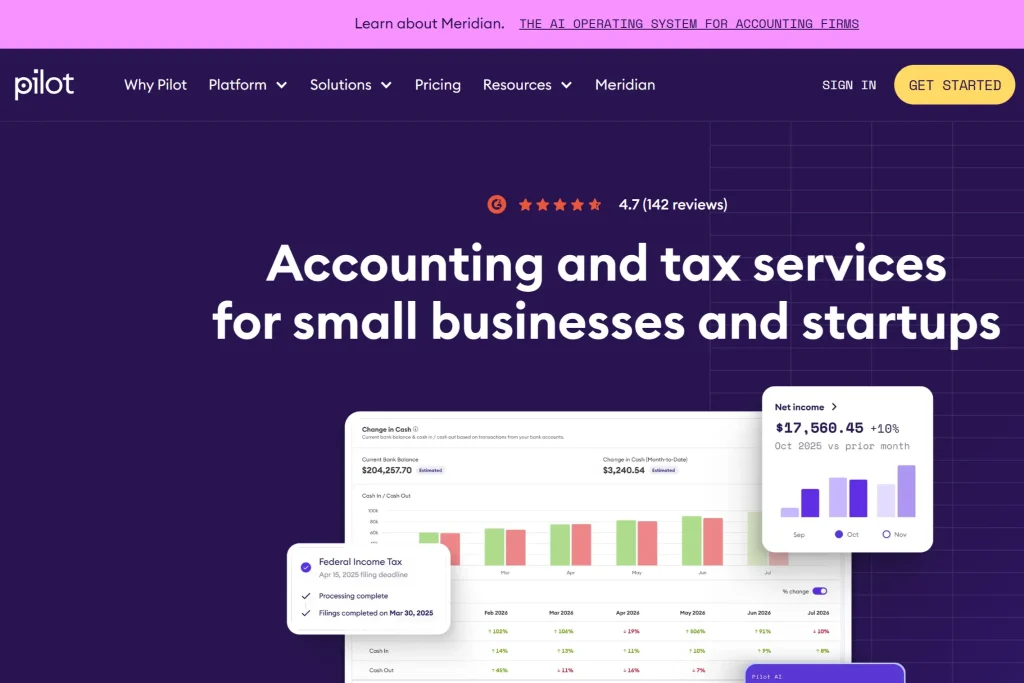
Pilot is positioned primarily toward startups and smaller businesses that want bookkeeping, tax, finance operations, and CFO support from the same provider.
Its current services combine bookkeeping with tax, fractional CFO work, and operational support including AP, AR, payroll, vendor management, and expenses.
That integrated model can simplify finance administration for a founder-led company without a mature internal finance organization. It is a different proposition from enterprise F&A BPO, where clients may have hundreds of finance employees, multiple ERPs, and complex process-governance requirements.
Best fit: Startups and smaller growing businesses seeking a packaged finance function.
Review carefully: Whether the service can support the entity complexity, transaction volume, and governance requirements expected as the business scales.
QX Global: Best for India-Based Finance and Accounting Outsourcing

QX Global provides outsourced Finance and Accounting services from delivery centers in India. Its offering is designed around processes including accounting operations, AP, AR, reporting, and broader F&A delivery for U.S. businesses and sector-specific clients.
Its recent 2026 finance content also emphasizes that outsourcing economics should be evaluated beyond labor rates, including process stability, operational flexibility, close performance, controls, and transformation.
QX may therefore suit buyers specifically evaluating India as a finance delivery location or seeking a provider with a mature F&A outsourcing practice.
Best fit: Companies seeking established India-based F&A delivery.
Review carefully: Specific industry experience, team model, governance structure, and which transformation capabilities are included in the commercial scope.
TOA Global: Best for CPA and Accounting Firms

TOA Global is highly specialized around accounting and bookkeeping firms. Its model provides dedicated offshore accountants, bookkeepers, auditors, and related professionals, primarily through operations in the Philippines.
The company currently reports more than 4,000 team members and more than 1,000 international clients, with role coverage spanning bookkeeping, AP, AR, reconciliations, tax-related accounting work, and financial reporting.
This specialization makes TOA particularly relevant to CPA, tax, and bookkeeping firms that need recurring capacity without expanding local headcount.
Best fit: Accounting and CPA firms building dedicated offshore teams.
Review carefully: Whether the model fits a corporate finance department as well as it fits an accounting practice.
US CPA Firms and the Big 4: When They Are the Better Fit
When the question is which provider a US company should consider, many shortlists also include US accounting and advisory firms. These firms are a different proposition from offshore delivery. They are usually chosen for US accounting judgment, tax, technical accounting, or transformation advisory rather than for high-volume transaction processing.
BDO USA and RSM US both offer outsourced accounting and finance services alongside tax and advisory work, with a strong focus on middle-market companies.
CLA (CliftonLarsonAllen) provides outsourced accounting for privately held businesses and nonprofits that want a US-based team.
Deloitte and Grant Thornton combine managed finance operations with transformation and advisory capabilities, which tends to suit larger organizations.
Other US firms buyers often see on AI-generated and analyst shortlists include EisnerAmper, Aprio, and Forvis Mazars.
Best fit: Companies that need US-based expertise, advisory input, or work closely tied to tax and technical accounting.
Review carefully: Hourly economics for recurring processing work. If the firm also audits your financial statements, auditor independence rules limit which accounting services it can provide.
Which Type of Accounting Outsourcing Model Fits Your Business?
After comparing providers, the next step is identifying the operating model you actually need. This usually narrows the shortlist faster than comparing dozens of product features.
A managed-process provider is appropriate when the buyer wants an external organization to operate AP, AR, R2R, or another defined process with formal governance, KPIs, and service levels. Genpact and some enterprise providers sit strongly in this category.
A dedicated offshore team makes more sense when the internal finance organization wants to retain control of the workflows while adding scalable capacity. Among outsourced accounting firms, this model is particularly relevant for companies that already have established finance leadership, systems, and approval controls but need additional execution capacity. Innovature, Personiv, TOA Global, and Outsourced represent different versions of this model.
A technology-enabled bookkeeping model is more appropriate when automation and standardized transaction processing are the primary requirements. Botkeeper is a clear example.
A fractional expert model works when the company needs judgment or specialist expertise rather than a large transaction-processing team. Paro fits this category.
For smaller companies that do not yet have a mature internal finance function, an integrated provider such as Pilot may be simpler than managing several separate accounting vendors.
Understanding these differences is important because comparing outsourced accounting firms purely on hourly rate can result in businesses comparing completely different services.
Best Fit for Accounts Payable Outsourcing
If AP is the main process to move, the shortlist changes. Enterprise BPOs such as Genpact, WNS, and Accenture are common choices for high-volume, multi-entity AP. Auxis fits buyers that want nearshore delivery. Software-led providers such as Corcentric and AvidXchange suit companies where payment automation is the priority. Dedicated offshore teams such as Personiv or Innovature BPO fit companies that want added capacity while keeping approvals and payment release in-house. Our accounts payable outsourcing guide explains how invoice volume and exception rates affect the choice.
What to Compare Before Selecting Outsourced Accounting Firms
Service scope should come first. Determine whether the provider will handle bookkeeping only, individual roles, or complete processes such as P2P, O2C, and R2R. Ask what the provider will own and what remains under the client’s finance team.
Buyers comparing outsourced accounting firms should also confirm whether the provider is supplying people, managing a defined workflow, or taking responsibility for an agreed business outcome.
The delivery model comes next. Confirm whether resources are dedicated or shared, where they are located, which working hours they cover, and how backup coverage is handled. For offshore delivery, buyers should also understand time-zone overlap, language requirements, and business-continuity arrangements.
Then review systems and process experience. A team that understands QuickBooks may still be a poor fit for a complex D365 or NetSuite environment. Buyers should ask which systems the proposed team actually uses rather than relying on a long software-logo list.
Governance and security should also be explicit. Clarify quality review, escalation, access controls, reporting cadence, segregation of duties, data retention, incident procedures, and the standards or certifications relevant to the work.
The strongest outsourced accounting firms should be able to explain these controls clearly and show how they are applied in day-to-day delivery, not only list them in sales materials.
Finally, examine proof from comparable engagements. A case study from a five-person bookkeeping client may not tell an enterprise controller much about the provider’s ability to operate a multi-entity month-end close.
How Much Do Outsourced Accounting Firms Cost?
There is no useful universal monthly price because the providers in this comparison use different commercial models.
Pricing across outsourced accounting firms can vary significantly because dedicated staffing, transactional processing, subscription bookkeeping, and managed F&A services do not price the same unit of work.
A dedicated offshore team may be priced per full-time equivalent. A bookkeeping provider may use a monthly subscription. Fractional experts may charge according to time or project scope, while managed F&A programs may combine base fees, volumes, service levels, transition costs, and technology charges.
The business case should therefore compare total operating cost, including:
provider fees + technology + implementation + transition + internal governance + retained finance capacity.
A lower headline rate does not necessarily create a lower total cost if the model requires more internal supervision, repeated rework, or additional software.
For businesses building a budget before approaching providers, our Finance Outsourcing Cost guide breaks down each pricing model and the costs that are easy to miss.
Where Innovature BPO Fits in the Comparison

Innovature BPO is most relevant when a company already has finance leadership and systems in place but needs additional execution capacity across recurring accounting operations.
Compared with larger enterprise outsourced accounting firms, Innovature’s model is designed to give clients greater flexibility in building dedicated or co-managed offshore Finance teams around existing workflows.
The model sits between traditional staff augmentation and large enterprise BPO. Clients can build dedicated teams while retaining direct control or use a co-managed structure where Innovature BPO adds operating oversight and quality management. Finance roles can support AP, AR, General Ledger, reconciliations, reporting, close activities, payroll-related work, and other recurring processes. Innovature BPO is certified to ISO/IEC 27001:2022 for information security and ISO/IEC 27701:2025 for privacy information management.
The first-party evidence is also more useful than generic cost claims.
In the US$1B IT staffing engagement discussed earlier, 29 offshore specialists were mobilized within three months, supporting a broader shared-service operation that eventually delivered more than US$1.2 million in annual savings, a 30% faster month-end close, and 97% SLA adherence after 12 months.
In another Finance Operations engagement during a Microsoft Dynamics 365 transition, Innovature supported GL, AP, and AR recovery work that moved invoice posting completion from 86% to 100%, reviewed roughly 800 invoices, and identified more than 100 previously unrecorded invoices.
These results are specific to those engagements. They are useful because they show the type of finance capacity, governance, and transition work buyers should ask providers to demonstrate during evaluation.
Final Takeaway
There is no single provider that is right for every finance organization.
Large global enterprises may value end-to-end transformation and process ownership. Accounting firms may prioritize access to dedicated accountants. Startups may want bookkeeping and CFO services in one package, while mid-market businesses may prefer a dedicated offshore finance team that works inside their existing systems and processes.
The most useful way to compare outsourced accounting firms is therefore to start with the operating model, then evaluate service depth, team structure, technology fit, governance, security, proof, and total cost.
A provider should fit the finance function you are trying to build, rather than forcing the finance function to fit the provider.
Frequently Asked Questions
How do I choose an outsourced accounting firm?
Start with what you want to transfer: individual roles, a defined process such as AP or month-end close, or the full finance function. Then compare providers that use the matching delivery model, and review service scope, team structure, systems experience, governance, and proof from similar engagements.
Should a US company use a CPA firm or an offshore accounting team?
A US CPA firm is usually the better fit for tax, technical accounting, and advisory work. An offshore team is usually more cost-effective for recurring execution such as AP, AR, reconciliations, and close support. Many companies use both, keeping judgment-heavy work onshore and moving recurring processing offshore.
How much do outsourced accounting firms cost?
It depends on the commercial model. Dedicated offshore teams are typically priced per full-time employee, bookkeeping providers often charge a monthly subscription, fractional experts bill by time or project, and managed F&A programs combine base fees, volumes, and service levels. Our Finance Outsourcing Cost guide compares each model.
How are controls and financial data handled?
Ask how access is restricted, how segregation of duties works, who reviews output before it reaches your team, and which security certifications or control reports apply, such as ISO/IEC 27001 or SOC reports.
Do offshore accounting teams include CPAs?
Some do. Offshore teams often combine qualified accountants holding CPA, ACCA, or equivalent local credentials with reviewers and team leads. Confirm which roles on your proposed team hold which qualifications.
What should I ask before signing?
Ask which processes the provider will own, which approvals stay with you, how quality and SLAs are measured, what backup coverage exists, how knowledge transfer works, and how the contract handles exit and data return.


Vendor master data controls govern how supplier records are created, verified, approved, changed, and deactivated before they are…

Accounts receivable aging analysis helps finance teams evaluate unpaid customer invoices, identify overdue exposure, and decide which balances…
Finance outsourcing governance is a framework that defines roles, decision rights, internal controls, and provider oversight when finance…
Selecting a finance outsourcing provider does not make a finance process ready to move. Before operational ownership changes…

PayrollOrg’s 2025 survey found that 38% of organizations do not track payroll performance, showing that payroll oversight remains…
Payroll accuracy often breaks down before payment is even made. PayrollOrg’s 2025 global survey identified poor-quality input data,…
Intercompany balances become harder to control as businesses add legal entities, currencies, systems, and cross-border transactions. A single…

An accounting quality control checklist helps Controllers and Finance Managers verify whether bookkeeping data is accurate, supported, and…

Month-end close often becomes harder as growing companies process more invoices, payments, reconciliations, and reporting requirements. Without a…

Accounts payable journal entries record what a business owes suppliers and how those obligations change over time. A…

Financial statements analysis is the process of examining a company’s income statement, balance sheet, and cash flow statement…

An offshore accounting strategy defines which finance work should move offshore, how that work will be delivered, who…
Ready to move faster?
Trust us to find the best-fit candidates while you concentrate on building a skilled and diverse remote team.